
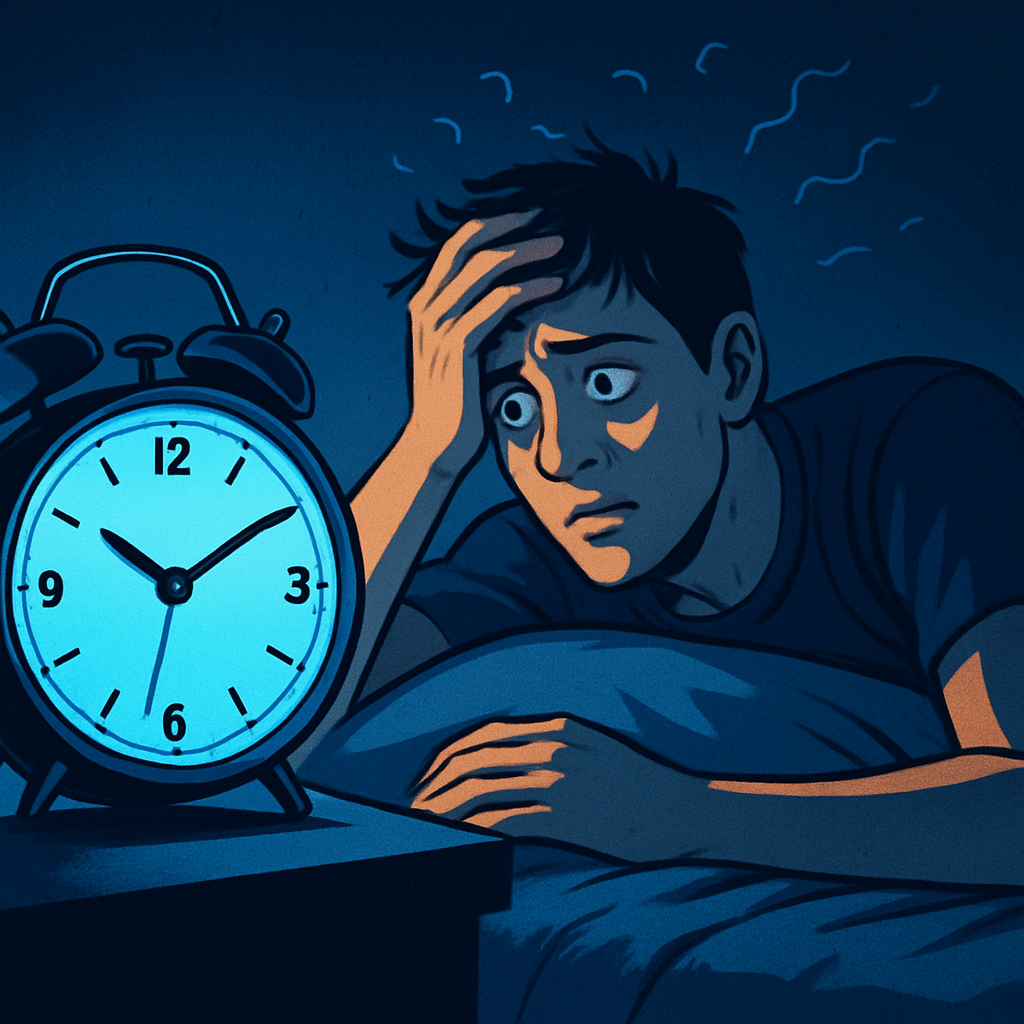
Sleep Procrastination and ADHD: Break the Habit and Improve Your Rest
For adults with ADHD, sleep procrastination adhd is a real pattern—late-night delays, restless evenings, and mornings that start behind. This post explains why the habit sticks—rooted in executive function gaps and the bidirectional link between ADHD symptoms and sleep—and then lays out a practical, ADHD-friendly plan you can start within days. You’ll get concrete routines, templates, and guidance on when therapy or coaching can help, so you can break the cycle and improve both rest and daytime performance.
Understanding the ADHD Sleep Procrastination Cycle
In adults with ADHD, sleep procrastination is not laziness—it’s a pattern of delaying sleep despite knowing rest matters. It often shows up as scrolling, gaming, or binge-watching long after you intended to shut down. The driver is executive-control gaps and delayed gratification, which makes starting the wind-down feel like a hurdle you keep pushing back.
That delay sits in a bidirectional loop with ADHD symptoms. When sleep goes off schedule, daytime attention, mood, and executive function suffer, which in turn makes predictably initiating the next night harder. In practice, one rough night often bleeds into the next, reinforcing a habit of postponing rest.
- Hyperfocus on late-night tasks that feel rewarding and hard to stop.
- Boredom or under-stimulation during the evening, prompting quick dopamine fixes.
- Overstimulation from screens and notifications near bedtime.
- Racing thoughts or anxiety that keep the mind spinning once you lie down.
Typical nighttime patterns in ADHD
ADHD tends to tilt bedtimes late and loosen consistency. People report delayed sleep onset by 60–120 minutes, longer wind-down periods, and more awakenings after sleep begins. Evening caffeine, variable lighting, and inconsistent routines compound the pattern, pushing sleep latency higher and amplifying next-day fog. Light exposure in the morning can help reset the cycle, but only if wake times align with that reset.
Concrete Example: Lena, 34, finishes work at 6 pm but scrolls social apps until 1 am. She intends to sleep by 11 pm, yet a highly engaging show and constant notifications pull her into a late wind-down. She finally falls asleep around 1:15 am and wakes groggy, dragging through the next workday.
Trade-off: Pushing bedtime earlier is not a simple switch in ADHD. Without explicit cues and a predictable wind-down, the habit can backfire, leaving you with shorter sleep but similar wake times. The practical cost is a few nights of lower sleep efficiency before the routine begins to stabilize, which typically takes 2–3 weeks.
Takeaway: Identify a single trigger and install one ADHD-friendly cue to start your wind-down, then track for 14 days to map patterns and iterate.
The Neurobiological Why: ADHD, Executive Function, and Sleep
ADHD reshapes sleep procrastination through specific brain systems rather than sheer laziness. The core issue isn't just bedtime avoidance; it’s how executive function, reward signaling, and arousal interact at night. In practice, that means your brain might be ready to wind down, yet a surge of dopamine-driven activity keeps you looping on late-night tasks. The result is a bidirectional loop: poor sleep worsens attention and self-regulation, while ADHD-driven behaviors delay sleep further.
Executive functions—planning, task initiation, and working memory—collapse as bedtime nears. Tasks like turning off devices, setting an alarm, and following a sequence require coordination that ADHD people often struggle with. The upshot: you know you should go to sleep, but the sequence to get there feels like a cliff. The limitation here is not motivation; it’s cueing and sequencing that need to be explicit, visible, and supported.
Reward processing compounds the issue. Delay discounting makes the present reward (scrolling, gaming, doomscrolling) seem more attractive than the longer-term payoff of rest. A practical antidote is to structure micro-rewards for initiating wind-down: a promised, tiny payoff after starting the routine or a visible progress cue that you can’t miss. Without explicit cues, the brain will opt for the quick hit every time.
Circadian rhythm differences often align with ADHD in a way that shifts sleep timing later. Blue-light exposure and evening arousal can push bedtimes outward, while morning light helps reset the rhythm. Practically, enforce a consistent wake time and a 60–90 minute pre-sleep window that reduces stimulation and calibrates melatonin onset. The trade-off is giving up late-night flexibility for deeper consistency.
Concrete example: a 34-year-old software engineer with ADHD notices that evenings spiral after a short burst of hyperfocus on a project. By adding an explicit wind-down cue—placing the phone in another room, starting a 60-minute routine, and using a CBT-I Coach checklist—their bedtime becomes predictable 80% of nights within two weeks.
A practical limitation to anticipate: neurobiological factors aren’t uniform. Some people need longer wind-downs, others respond to different cues, and anxiety or comorbid mood symptoms can derail even the best schedules. The fix is to tailor explicit cues and predictable sequences to your own rhythm, rather than copy-pasting a template.
Takeaway: start with one explicit cue and a fixed wake time, then layer in a 60–90 minute wind-down and a brief diary to surface patterns.
ADHD-Friendly Sleep Audit: Find Your Personal Pattern
This ADHD-friendly sleep audit is not a vague exercise in self-restraint. It’s a structured, 14-day pattern capture designed to surface the exact moments your brain negotiates sleep away. Start by picking a fixed wake time and treating the two weeks as a data collection window. Track bedtimes, actual sleep onset, awakenings, screen use after dark, caffeine, wind-down duration, and any distractions that pull your attention away from rest. The goal is to reveal repeatable triggers, not guilt.
- Bedtime rituals and wind-down duration: note how long you actually give yourself to relax before lights out.
- Screen use after dark: track timing, content, and whether it precedes difficulty falling asleep.
- Caffeine timing and load: log last caffeine dose and total daily amount, especially after noon.
- Environmental cues: monitor light, noise, and room temperature in the hour before bed.
Next, map your energy and focus rhythms across the day to determine a realistic bedtime. Many with ADHD peak in the late afternoon or early evening, which paradoxically makes the hour before bed feel fragile. Use a simple chart: high-energy windows, fatigue dips, and moments when distractions feel strongest. Let the audit translate into concrete bedtime targets and cue-based routines rather than vague intentions.
Sophie, 32, ran a 14-day diary and discovered her bedtime drifted whenever she scrolled after 9 pm. On days with late screen time, sleep onset was around 11:15 pm; on calmer evenings she started winding down by 9:45 pm and slept closer to 10:45 pm. Armed with that pattern, she anchored a hard 10 pm wind-down and saw more consistent sleep within two weeks.
Be mindful of the audit’s limits. Diaries are honest but can be noisy; one-off events (late work, travel) skew a few days. The payoff is clarity: you get a tailored plan that respects ADHD realities—explicit cues, visible schedules, and built-in accountability—so you can adjust without spiraling into guilt. If you want a guided path, ADHD sleep resources can help you turn patterns into a practical plan.
Evidence-Based Strategies to Break the Habit (ADHD Adapted CBT-I)
ADHD sleep problems respond best to explicit, ADHD-aware CBT-I. The core ideas stay the same—reduce wakefulness in bed, cue the body that bedtime equals rest, and reframe thoughts—but you have to tune the sequence for executive function gaps and arousal spikes. This is about practical structure, not mystic self-discipline. The framing matters: addressing sleep procrastination adhd directly yields more predictable results.
Stimulus control and wake-time discipline are the first lever. Create a firm boundary around bed and sleep, and anchor it to a consistent wake time. In practice, this means a fixed 7:00 am start (for many adults) and a 60–90 minute wind-down that begins at a reliable cue such as a phone notification labeled Bedtime Cue.
Sleep restriction, when tailored to ADHD, focuses on a realistic initial window. Don’t overextend the time in bed; start with a target sleep window that matches current average sleep duration and tighten gradually as sleep efficiency improves. The key is gradual progress, not perfection, because ADHD-type restlessness makes strict restriction feel punitive if done alone.
Cognitive strategies address racing thoughts and task initiation. Use brief, concrete thoughts to reframe nighttime urges: instead of chasing perfect productivity, remind yourself that rest supports daytime focus. Quick journaling of worries at a fixed wind-down point can prevent late-night rumination from spilling into bed.
ADHD-specific tweaks matter. Use explicit cues, visible schedules, and built-in accountability. A visible nightly checklist on your dresser, a shared plan with a partner, or a brief coaching session can improve adherence far more than generic advice. Structured supports help translate intent into action.
- Core techniques with ADHD tweaks: stimuli control, sleep restriction, cognitive restructuring, and consistent sleep hygiene.
- ADHD-friendly additions: explicit cueing, visible schedules, and accountability mechanisms such as coaching or therapy.
- Practical nightly routine: a 60–90 minute wind-down, screen curfew, and morning light exposure.
Concrete example: Maria uses a fixed 10:30 pm wind-down with dim lights, a 11:00 pm screen curfew, and a 1-page worry list she completes at 9:45 pm. A 5-minute check-in with a partner confirms she followed the cue and moved toward bed. Within two weeks she notices earlier sleep onset and fewer awakenings.
Trade-offs and limits: too aggressive sleep restriction can backfire if daytime energy drops; pairing with a daytime activity plan and optional therapist or coach reduces risk. If you relapse, reset the window by 15 minutes rather than abandoning the approach.
A practical path forward is to start with a fixed wake time and a 14-day sleep diary, plus ADHD-friendly cues. A tailored plan with Therapy for Adulting can provide accountability and help tailor cues to your life. See how ADHD coaching and CBT-I can be combined in a structured program Therapy for Adulting.
Takeaway: the fastest path to reducing sleep procrastination adhd is predictable structure with accountability. Start with a fixed wake time, a 60–90 minute wind-down, and a 14-day diary, then layer ADHD-friendly cues and coaching if needed.
Tools, Templates, and Real-World Apps That Help
Tools won't fix sleep procrastination by themselves, but they create the structure ADHD brains need to start and finish wind-down routines.
Pick tools that fit your real life, not the glossy promise. Start with one template for a 14-day diary, one reminder system, and one wind-down routine, then layer in more only after the basics stick.
- CBT-I Coach and related CBT-I tools can guide you through sleep restriction, stimulus control, and cognitive strategies, with ADHD-adapted prompts and reminders. Use it to document sleep latency and build explicit cues for bedtime.
- Reminders and calendars like Google Calendar, Todoist, or Apple Reminders help you enforce wake times and wind-down blocks. Create a daily 60–90 minute wind-down block and a fixed wake time, then set 2–3 reminders to begin and end the routine.
- Light and focus aids: daylight lamps can advance circadian timing, while apps like RescueTime help you limit late-night screen time. Pair with a guided wind-down from Headspace or Calm to anchor attention away from late-night scrolling.
Concrete use case: Start with a 14-day sleep diary in the CBT-I Coach, paired with a Google Calendar reminder for a 60-minute wind-down window each night. Use a daylight lamp in the evening, and log latency and awakenings in the diary. After two weeks, assess whether you consistently hit a 7–8 hour window and adjust wake time if needed.
Be aware of a practical trade-off: tools increase accountability but can become a source of friction if they require excessive setup or data syncing. The more you customize, the more you must maintain; keep it simple at first to avoid churn.
Next, run a 7–14 day pilot with your chosen tools and templates. Use the data to decide what to keep, what to drop, and what to normalize into your daily rhythm.
Therapy for Adulting: How Support Helps You Break the Habit
Therapy for ADHD sleep problems is not a luxury; it is a practical framework that pairs evidence based sleep work with ADHD specific strategies. You want durable change, not quick fixes. A typical plan blends CBT-I adapted for ADHD with coaching or ACT to address motivation, perfectionism, and relationship stress that keeps you up late.
Therapy options and how they map to sleep work
- CBT-I adapted for ADHD: explicit cueing, longer but structured wind-downs, and small, manageable steps rather than big changes.
- ADHD coaching: helps with planning, task initiation, and environmental setup that reduces bedtime friction.
- ACT for sleep: focuses on acceptance and values alignment to reduce struggle around nighttime routines.
- Couples or family therapy: can stabilize routines when partners or kids influence bedtimes.
Maya, a 38-year-old with ADHD, started a combined plan of CBT-I adapted sessions plus weekly coaching. In six weeks she moved her typical bedtime from around 1:30 AM to 11:45 PM, using explicit cues and a 60-minute wind-down. She also began a morning light routine that reinforced the new schedule.
What to expect in a therapy plan with Therapy for Adulting: Most plans begin with a 60-minute intake, a baseline sleep diary, and a target wake time. You receive a tailored ADHD-friendly CBT-I module plus accountability checks, either weekly or biweekly. You can pair therapy with practical supports like coaching and digital reminders; Therapy for Adulting clinicians tailor the pace and tools to your daily life. For broader context on how therapy options fit ADHD challenges, see Understanding Dysphoria in ADHD: Why It Happens and Therapy Options That Help – Therapy for Adulting and Thriving at Work: Essential ADHD Accommodations for Professional Success – Therapy for Adulting.
Trade-offs and practical realities: expect a time investment and some cost. The payoff is durable improvements in sleep latency and daytime energy, but progress relies on consistency and adapting plans to real world constraints such as shift work or family demands.
Starting steps: to begin, book a consult with Therapy for Adulting and mention you want an ADHD focused sleep plan. Bring a 14-day sleep diary if possible, and outline current bedtimes, wake times, caffeine use, and evening activities. See the internal resources linked above for context on how therapy options align with your broader goals at work and home.
Takeaway: Schedule a consult to map a therapy driven sleep plan.