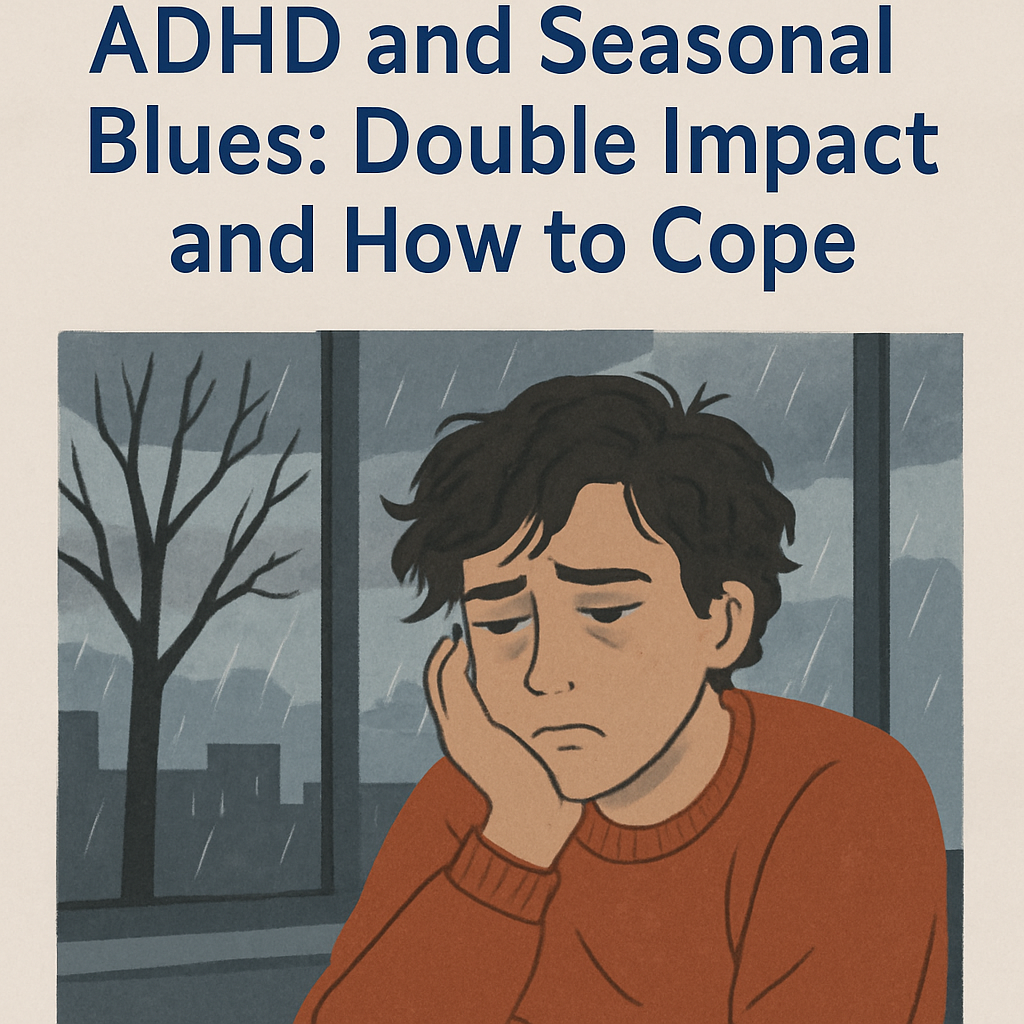
ADHD and Seasonal Blues: Double Impact and How to Cope
Introduction
Welcome to the wild world of ADHD and seasonal depression, where your brain and the weather team up to throw you a curveball. If you’re someone who experiences the winter blues, you might feel like you’re in a tug-of-war between your ADHD symptoms and those pesky seasonal affective disorder (SAD) vibes. It’s like trying to juggle flaming torches while riding a unicycle on a tightrope suspended over a pit of alligators exciting, but not exactly easy!
For many adults with ADHD, winter can feel like an extended episode of “Survivor,” where the challenges just keep piling up. The darker days can amplify ADHD symptoms such as inattention, impulsivity, and emotional dysregulation, making it tough to focus on anything other than how much you’d rather be hibernating like a bear. And let’s not forget the toll that decreased serotonin levels can take on your mood!
But fear not! This blog post is here to guide you through the double impact of ADHD and seasonal depression. We’ll explore how these two conditions interact, share effective coping strategies, and provide insight into treatment options that can help you navigate those dreary months with a little more ease.

Understanding ADHD and Seasonal Depression
Let’s dive into the fascinating world of ADHD and seasonal depression. First off, what exactly is ADHD? Attention-Deficit/Hyperactivity Disorder (ADHD) is a neurodevelopmental disorder that affects both children and adults. It can manifest through symptoms like inattention, hyperactivity, and impulsiveness. But wait, there’s more! When winter rolls around, many people experience a dip in their mood due to Seasonal Affective Disorder (SAD), also known as the winter blues.
SAD is a type of depression that typically occurs during the fall and winter months when sunlight is limited. Symptoms can include fatigue, hopelessness, difficulty concentrating, and changes in sleep patterns. Now imagine having ADHD on top of that! The combination can feel like trying to juggle flaming torches while riding a unicycle on ice challenging at best!
Research shows that individuals with ADHD are more likely to experience seasonal depression symptoms. This means they may face an even tougher battle during those gloomy months.
The Connection Between ADHD and Seasonal Depression Symptoms
So how do these two conditions intersect? Well, the symptoms of ADHD like difficulty focusing or managing time can become even more pronounced when someone is also grappling with SAD. The reduced serotonin levels associated with seasonal affective disorder can amplify feelings of lethargy and distractibility in individuals already navigating the challenges of ADHD.
Moreover, those with ADHD may struggle to implement effective coping strategies for managing their seasonal depression symptoms. It’s like trying to solve a Rubik’s cube while wearing oven mitts; it’s just not going to happen smoothly! Understanding this connection is crucial for finding effective treatment options.

The Double Impact: How ADHD Affects Seasonal Blues
When winter rolls in, it’s not just the snowflakes that start falling so do the mood levels for many. For adults grappling with ADHD and seasonal depression, this time of year can feel like a double whammy. Imagine trying to juggle flaming torches while riding a unicycle on ice. Yeah, it’s that tricky.
ADHD Symptoms Exacerbated by Seasonal Changes
As the days grow shorter and sunlight becomes a rare commodity, those pesky ADHD symptoms can be magnified. You might find yourself:
- Feeling more restless and impulsive
- Struggling with focus as your brain fog thickens like a winter blizzard
- Experiencing heightened irritability and emotional dysregulation
Impact of Weather on Mental Health for Adults with ADHD
The connection between weather and mental health is nothing to sneeze at. Research shows that changes in weather can trigger fluctuations in mood, particularly for adults with ADHD. Think of it as your brain reacting to the world outside when it’s gray and gloomy, so is your mental landscape.
Did you know? Studies indicate that adults with ADHD are more sensitive to environmental changes, making them more susceptible to conditions like seasonal affective disorder (SAD).
Mood Disorders and Their Relationship with Seasonal Changes
Mood disorders are like unwelcome guests who overstay their welcome, especially during winter months. For those with both ADHD and seasonal depression, it’s crucial to recognize the signs:
- Low energy levels: Feeling like you’re dragging through molasses?
- Increased anxiety: Ever feel like you’re stuck in an endless loop of worry?
- Social withdrawal: Wanting to hibernate instead of hang out? Totally relatable.
Coping with these overlapping challenges can feel daunting, but understanding how they interact is the first step toward managing them effectively.

Coping Strategies for Managing ADHD and SAD
When the winter blues hit, it can feel like a double whammy for those dealing with ADHD and seasonal depression. But fear not! There are plenty of strategies to help you navigate these choppy waters.
Lifestyle Changes for Managing ADHD and SAD
First things first: let’s talk about lifestyle changes. These are the bread and butter of coping with both ADHD symptoms and seasonal affective disorder. Here’s what you can do:
- Routine is your best friend: Establish a daily schedule that includes time for work, relaxation, and self-care. Consistency can help stabilize those fluctuating serotonin levels in depression.
- Get moving: Incorporate regular exercise into your routine. Exercise has been shown to boost mood and can be particularly beneficial for managing ADHD and SAD. Think of it as your personal superhero cape!
- Sunshine therapy: Whenever possible, soak up the sun. Even on cloudy days, natural light can help improve your mood. If sunlight is scarce, consider investing in a light therapy box to combat those winter blues.
The Role of Diet in Managing Seasonal Depression and ADHD Symptoms
Your diet can play a significant role in how you feel. Here are some dietary tips to keep in mind:
- Omega-3 fatty acids: Foods rich in omega-3s, like salmon or walnuts, may help alleviate some symptoms of both ADHD and depression.
- Avoid sugar spikes: Keep an eye on sugar intake; high-sugar foods can lead to mood swings that exacerbate ADHD symptoms.
- Vitamin D: Since seasonal affective disorder often coincides with lower vitamin D levels due to less sunlight exposure, consider foods rich in vitamin D or supplements after consulting with a healthcare provider.
Importance of Sleep Patterns in Seasonal Affective Disorder and ADHD Patients
A good night’s sleep is crucial for everyone but especially important when you’re managing both ADHD and SAD. Disrupted sleep patterns can worsen symptoms of both conditions.
- Create a sleep sanctuary: Make your bedroom a calm oasis think cool temperatures, comfortable bedding, and minimal noise.
- Avoid screens before bed: The blue light emitted by screens can interfere with your ability to fall asleep. Try reading a book or meditating instead!
- Establish a bedtime routine: Wind down each night with calming activities to signal your body that it’s time for sleep.

Treatment Options for ADHD and Seasonal Depression
When the winter blues hit, treating both ADHD and seasonal depression can feel like trying to juggle flaming torches while riding a unicycle. But fear not! There are effective strategies to help you navigate this tricky terrain.
- ADHD treatment options during winter months: It’s crucial to stick to your treatment plan, whether it includes medication or therapy. The cold weather can make symptoms feel more pronounced, so keeping in touch with your healthcare provider is key.
- Light therapy for SAD: This is like a sun vacation without the plane ticket! Light therapy involves sitting in front of a bright light box for about 20-30 minutes each day. It’s been shown to boost serotonin levels, which can help alleviate those pesky seasonal depression symptoms. Just remember to follow guidelines for safe use!
- Cognitive behavioral therapy (CBT) for SAD in adults with ADHD: CBT can be a game-changer. It focuses on changing negative thought patterns and behaviors, helping you tackle both ADHD symptoms and seasonal depression. Think of it as mental spring cleaning!
- ADHD medication options: If you’re on medication, consult your doctor about any adjustments needed during the darker months. Sometimes, the right dose or type of medication can make all the difference in managing both conditions effectively.
- Nutritional supplements: Don’t underestimate the power of vitamin D! Studies suggest that adequate vitamin D levels may play a role in managing symptoms of seasonal affective disorder. Consider discussing with your healthcare provider whether you might benefit from supplementation during those gray winter months.
Key Takeaway: Combining treatment options tailored to both ADHD and seasonal depression can create a powerful strategy for coping with winter’s challenges. Don’t hesitate to reach out for support you’re not alone in this!
Mental Health Support Resources
When navigating the tricky waters of ADHD and seasonal depression, having a solid support system can make all the difference. Here are some resources that can help you stay afloat during those winter blues:
- Finding Therapy: Look for therapists who specialize in both seasonal affective disorder (SAD) and ADHD. They can offer tailored strategies that address your unique challenges. Websites like Psychology Today allow you to filter by specialties, making it easier to find the right fit.
- Support Groups: Connecting with others who understand what you’re going through can be incredibly beneficial. Support groups for adults dealing with ADHD and SAD provide a safe space to share experiences and coping strategies. Check local community centers or online platforms like Meetup for options.
- Online Resources: The internet is a treasure trove of information! Websites like NAMI (National Alliance on Mental Illness) and ADDitude offer articles, forums, and tools specifically focused on managing ADHD symptoms alongside seasonal depression. They also provide tips on lifestyle changes that can help boost your mood.
Key Takeaway: Don’t hesitate to reach out for help. Whether it’s finding a therapist, joining a support group, or utilizing online resources, taking proactive steps can significantly improve your mental health during the winter months.
Conclusion
As we wrap up our exploration of ADHD and seasonal depression, it’s clear that the winter months can feel like a double whammy for those navigating both ADHD symptoms and seasonal affective disorder (SAD). The cold, dark days can amplify feelings of lethargy, distractibility, and frustration all while serotonin levels dip lower than a snowman in July.
But fear not! With the right strategies in place, you can combat the winter blues and manage your mental health effectively. Whether it’s through lifestyle changes, exercise, or light therapy for SAD, there are numerous ways to keep your spirits lifted. Remember that understanding how these two conditions interplay is crucial in finding effective coping mechanisms.
If you’re feeling overwhelmed by the weight of ADHD and seasonal depression, seeking mental health support is a proactive step. Therapy for seasonal depression tailored for adults with ADHD can provide personalized strategies to help you thrive during the colder months.
So this winter, don’t just hibernate like a bear equip yourself with tools to tackle those seasonal challenges head-on! And remember: spring will come again, but until it does, let’s make the most of these chilly months together.