
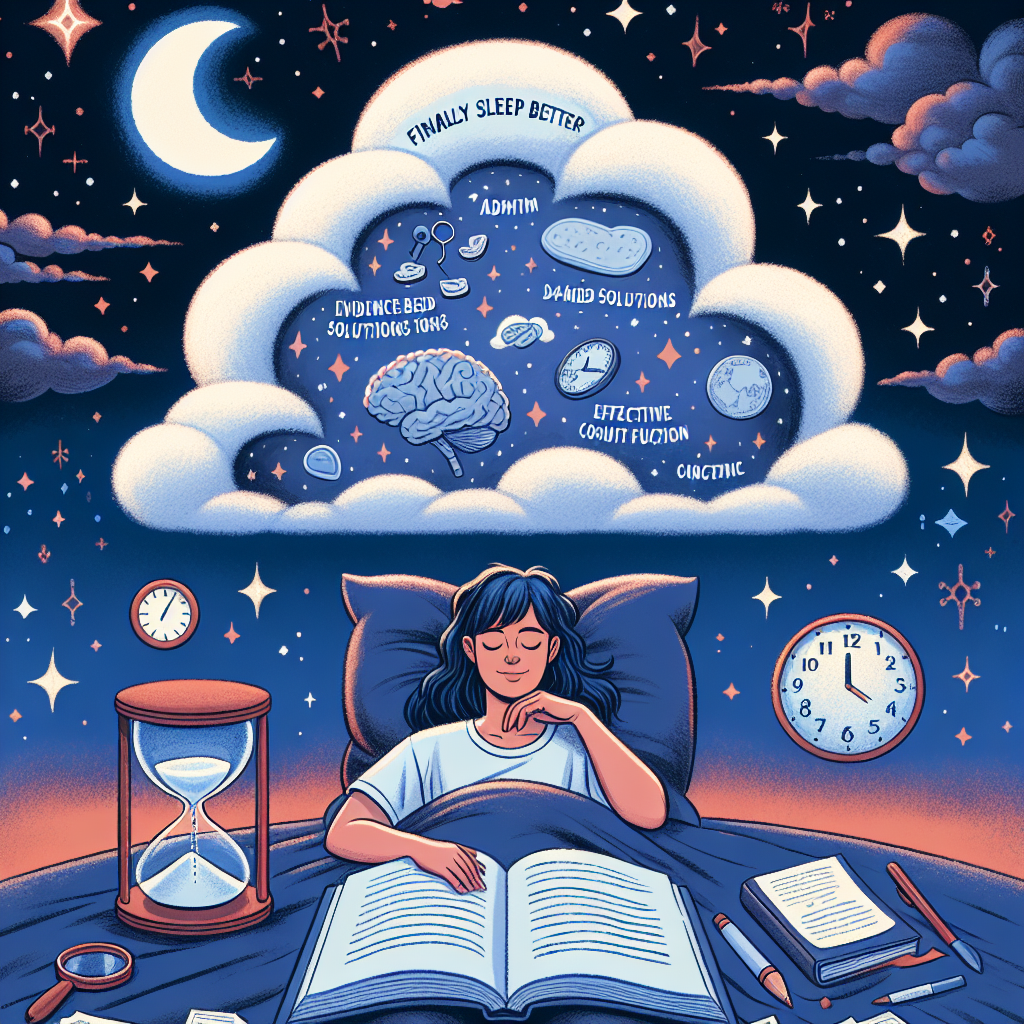
Finally Sleep Better: Evidence-Based Solutions for ADHD-Related Sleep Issues
Article Overview
Article Type: How-To Guide
Primary Goal: Give adults with ADHD actionable, evidence-based interventions they can start immediately and discuss with clinicians so they improve sleep onset, sleep maintenance, and daytime functioning within weeks
Who is the reader: Adults aged 18 to 55 who have ADHD or suspect they have ADHD, visiting Therapy for Adulting website; many are working professionals, graduate students, or early-career adults balancing relationships and adulting tasks; they are actively searching for practical solutions and considering therapy or medication changes but are not always sure which steps to take first
What they know: Readers know they have trouble falling asleep, staying asleep, or waking at the time they want; they may be aware of general sleep hygiene tips and that stimulant medication can affect sleep but often do not know specific evidence-based treatments for insomnia or circadian delay tailored to ADHD, or how to adapt standard treatments to executive function challenges
What are their challenges: Difficulty initiating sleep due to hyperarousal or hyperfocus at night, delayed sleep phase, inconsistent routines caused by executive dysfunction, medication timing issues, nighttime rumination and anxiety, daytime sleepiness or poor concentration, and uncertainty about when to seek a sleep specialist or change medication
Why the brand is credible on the topic: Therapy for Adulting provides specialized mental health therapy for adults with ADHD and related adulting challenges. Clinicians use evidence-based treatments including cognitive behavioral therapy, behavior activation, and ADHD coaching techniques. The practice coordinates care with prescribing clinicians and refers for sleep medicine assessments when needed. Therapy for Adulting has published client resources and blog content on ADHD management and sleep strategies tailored to adult life and relationships
Tone of voice: Warm, pragmatic, nonjudgmental, and evidence-driven; prioritize clarity and operational detail rather than clinical jargon; balance clinical credibility with approachable language and micro steps that counter executive dysfunction
Sources:
- Bijlenga D et al. Sleep and circadian rhythm disturbances in adults with attention-deficit/hyperactivity disorder: A systematic review. Sleep Medicine Reviews. PubMed https://pubmed.ncbi.nlm.nih.gov/30414374/
- American Academy of Sleep Medicine clinician resources on cognitive behavioral therapy for insomnia https://aasm.org/clinical-resources/cognitive-behavioral-therapy-for-insomnia/
- American College of Physicians clinical practice guideline recommending CBT-I as first-line treatment for chronic insomnia https://www.acpjournals.org/doi/10.7326/M15-2175
- Sleep Foundation guidance on ADHD and sleep https://www.sleepfoundation.org/adhd
- CHADD resources for adults with ADHD and sleep issues https://chadd.org/for-adults/overview/
Key findings:
- Adults with ADHD have higher prevalence of insomnia symptoms and circadian rhythm delays compared with adults without ADHD
- Cognitive behavioral therapy for insomnia adapted for ADHD features such as external supports, simplification of tasks, and emphasis on routine is effective and is recommended as first-line treatment for chronic insomnia
- Melatonin at appropriate timing and dose can be effective for delayed sleep phase but must be used with timing guidance; stimulant medication timing strongly influences sleep quality
- Digital CBT-I programs such as Sleepio and clinically delivered CBT-I show meaningful improvements in sleep metrics and daytime functioning, and can be combined with ADHD-specific supports
- Simple sleep hygiene alone is insufficient; behavioral prescriptions that account for executive dysfunction and environmental design produce better adherence and results
Key points:
- Deliver evidence-based interventions: CBT-I adapted for ADHD, chronotherapy and melatonin guidance, medication timing adjustments, and environmental/technology strategies
- Give a clinician-grade assessment checklist and decision flow so readers know when to self-manage versus seek medical or sleep medicine referral
- Provide a concrete 4-week step-by-step plan with daily examples, troubleshooting tips, and accommodations for executive dysfunction
- Show real case examples and exact language readers can use when talking to prescribers and therapists
Anything to avoid:
- Offering medical prescriptions or instructing readers to start or stop medications without consulting a prescriber
- Presenting sleep hygiene as a standalone solution or promising complete cure for sleep problems
- Using moralizing language that implies readers are at fault for poor sleep
- Recommending unproven supplements or treatments without evidence and safety notes
- Heavy clinical jargon without clear practical translation
External links:
- https://pubmed.ncbi.nlm.nih.gov/30414374/
- https://aasm.org/clinical-resources/cognitive-behavioral-therapy-for-insomnia/
- https://www.acpjournals.org/doi/10.7326/M15-2175
- https://www.sleepfoundation.org/adhd
- https://chadd.org/for-adults/overview/
Internal links:
- Adult ADHD Therapist | Gina Arellano | Therapy for Adulting
- Adult ADHD Treatments | FAQs | Therapy for Adulting
- Therapy Screening Tool – Therapy for Adulting
- The Hidden Struggles: How ADHD Can Affect Women
- Finding the Right Therapist: A Guide for Adults with ADHD – Therapy for Adulting
Content Brief
Guide for writers: This article must be pragmatic and clinically informed while remaining accessible. Cover why ADHD specifically disrupts sleep, concrete assessment steps clinicians and self-managing adults can use, and evidence-based interventions with ADHD-adaptations. Emphasize CBT-I as first-line for chronic insomnia and include chronotherapy and medication timing as secondary strategies that require prescriber collaboration. Provide a 4-week implementation plan, two brief real-world case examples, specific scripts readers can use with prescribers, and clear referral criteria. Use the primary keyword adhd sleep problems solutions in the title, first 100 words, and in 2 to 3 subheadings. Aim for 1,600 to 2,500 words. Tone should be warm, action oriented, and nonjudgmental. Avoid promising complete cures and avoid recommending specific prescription drugs without advising consultation with a prescriber. Include internal links to Therapy for Adulting pages and external authoritative sources
Why ADHD Disrupts Sleep: Mechanisms and Common Presentations
- Neurobiological factors: arousal regulation, differences in dopaminergic and noradrenergic systems and how these affect sleep onset and maintenance
- Circadian tendencies: higher rates of delayed sleep phase and eveningness in adults with ADHD with reference to Bijlenga systematic review
- Behavioral contributors: nighttime hyperfocus, irregular routines, caffeine and stimulant timing, bedtime rumination and anxiety
- Comorbid sleep conditions to screen for: obstructive sleep apnea, restless legs syndrome, and mood or anxiety disorders
How to Assess ADHD-Related Sleep Problems: A Clinician Grade Checklist for Adults
- Use validated screening tools: Insomnia Severity Index, Pittsburgh Sleep Quality Index, Epworth Sleepiness Scale, Morningness Eveningness Questionnaire
- Medication and substance review: stimulant type, dose, timing, caffeine, alcohol, nicotine
- Collect baseline data: 2 week sleep diary, actigraphy when available, smartphone sleep logs; include timing of hyperfocus episodes
- Red flags and when to refer for polysomnography or specialty care: excessive daytime sleepiness, witnessed apneas, sudden changes in sleep pattern, or suspected parasomnias
CBT for Insomnia Adapted for ADHD: Core Techniques and Modifications
- Core CBT-I components: stimulus control, sleep restriction, cognitive restructuring, relaxation training and how each works for ADHD
- ADHD adaptations: external supports such as alarms, visual schedules, checklists, simplified instructions and involvement of accountability partners
- Digital and blended options: Sleepio, Somryst, and clinician-delivered CBT-I examples and when digital options are appropriate
- Common obstacles and scripts: overcoming bedtime hyperfocus, addressing racing thoughts, using implementation intentions
Chronotherapy, Melatonin, and Medication Management
- Melatonin for delayed sleep phase: low dose timing strategies and practical cautions; coordinate with prescriber
- Stimulant timing and formulation: strategies to reduce evening sleep disruption including earlier dosing, long acting versus short acting considerations, and coordinating with prescriber
- When sedating medications are considered: off-label options like trazodone and hypnotics only under prescriber guidance and for short term use
- How to talk to your prescriber: sample language to request timing adjustments or sleep-focused medication review
Technology, Light, and Environment: Practical Changes That Actually Stick
- Blue light management tools: Night Shift, f.lux, and device curfews; concrete timing recommendations for screens
- Bedroom design for executive function: remove decision points, create an automatic wind-down station, use Philips Hue or smart plug schedules for lighting
- Sound and comfort: white noise machines, cooling mattresses, weighted blanket considerations and evidence notes
- App and device recommendations: digital sleep diaries, alarm systems that enforce wake time, and apps for guided wind-down
A 4-Week Action Plan for Adults with ADHD and Sleep Problems
- Week 0 baseline: complete ISI or PSQI, two week sleep diary and list of evening triggers
- Week 1: Fix wake time and light exposure; anchor wake time with sunlight or light therapy and set consistent morning routine
- Week 2: Implement stimulus control and simplified sleep restriction with accountability supports and timers
- Week 3: Add cognitive strategies for nighttime rumination and begin melatonin or mediation with prescriber if circadian delay persists; troubleshoot common barriers
- Week 4: Consolidate gains, prepare maintenance plan, and schedule follow up with therapist or prescriber
When Self-Management Is Not Enough: Referral Criteria and How Therapy for Adulting Can Help
- Clear referral criteria: persistent insomnia after 6 weeks of guided interventions, suspected sleep apnea, severe daytime impairment, or suicidal ideation
- How integrated care works: collaborating with prescribers, making a shared plan for medication timing, and referring for polysomnography when indicated
- Services Therapy for Adulting offers: ADHD-focused therapy, CBT-I adaptations for ADHD, coaching for routine building, and sample intake and booking process
Two Practical Case Examples with Scripts and Outcomes
- Case 1 Sam age 28: delayed sleep phase and evening hyperfocus; interventions used melatonin 0.5 1 mg timed 5 hours before desired sleep, strict wake time anchor, external timers and saw improved sleep onset in 3 weeks
- Case 2 Maya age 35: stimulant taken late and rumination; intervention moved stimulant earlier under prescriber guidance, implemented stimulus control and nightly worry notebook and improved sleep efficiency and daytime concentration
- Exact clinician scripts and patient language to request medication timing review and CBT-I referral
Frequently Asked Questions
Can stimulant medications cause insomnia in adults with ADHD and what can be done about it
Yes stimulants can worsen sleep when taken late; discuss adjusting dose timing or formulation with your prescriber and pair changes with behavioral strategies like earlier wake time and CBT-I elements
Is cognitive behavioral therapy for insomnia effective for people with ADHD
Yes CBT-I is first-line for chronic insomnia and when adapted to include external supports and simplified steps it is effective for many adults with ADHD
How can melatonin help and how should it be timed
Low dose melatonin can shift circadian timing when taken several hours before desired sleep onset but must be timed carefully and coordinated with a clinician for best results
What quick steps can I take tonight to improve my chances of falling asleep
Set a hard wake time for tomorrow morning increase bright light exposure on waking and start a 30 to 60 minute electronic curfew with a wind-down routine using a timer
When should I get a sleep study for possible obstructive sleep apnea
If you have loud snoring witnessed apneas morning headaches or excessive daytime sleepiness despite behavioral changes request a referral for polysomnography
Are digital CBT-I programs worth trying for someone with ADHD
Digital CBT-I programs like Sleepio can be helpful especially when combined with ADHD tailored supports but clinician guidance is recommended for complex cases
How long before I should expect to see improvement after starting these strategies
Some changes such as earlier wake time and light exposure can improve sleep within 1 to 2 weeks while full benefits from CBT-I often appear over 4 to 8 weeks