The Hidden Link Between ADHD and Trauma: What Adults Need to Know
The link between adhd and trauma in adults runs deeper than you might expect, shaping attention, emotion, and daily life in subtle but lasting ways. This post explains how trauma can intensify ADHD symptoms like emotional dysregulation and sleep disruption, how ADHD can influence exposure to trauma, and what integrated, evidence-based treatment looks like in real life. You’ll come away with practical steps for assessment, coping strategies, and daily routines, plus how Therapy for Adulting can tailor care to your work, dating, and long-term adulting goals.
Understanding the Hidden Link Between ADHD and Trauma in Adults
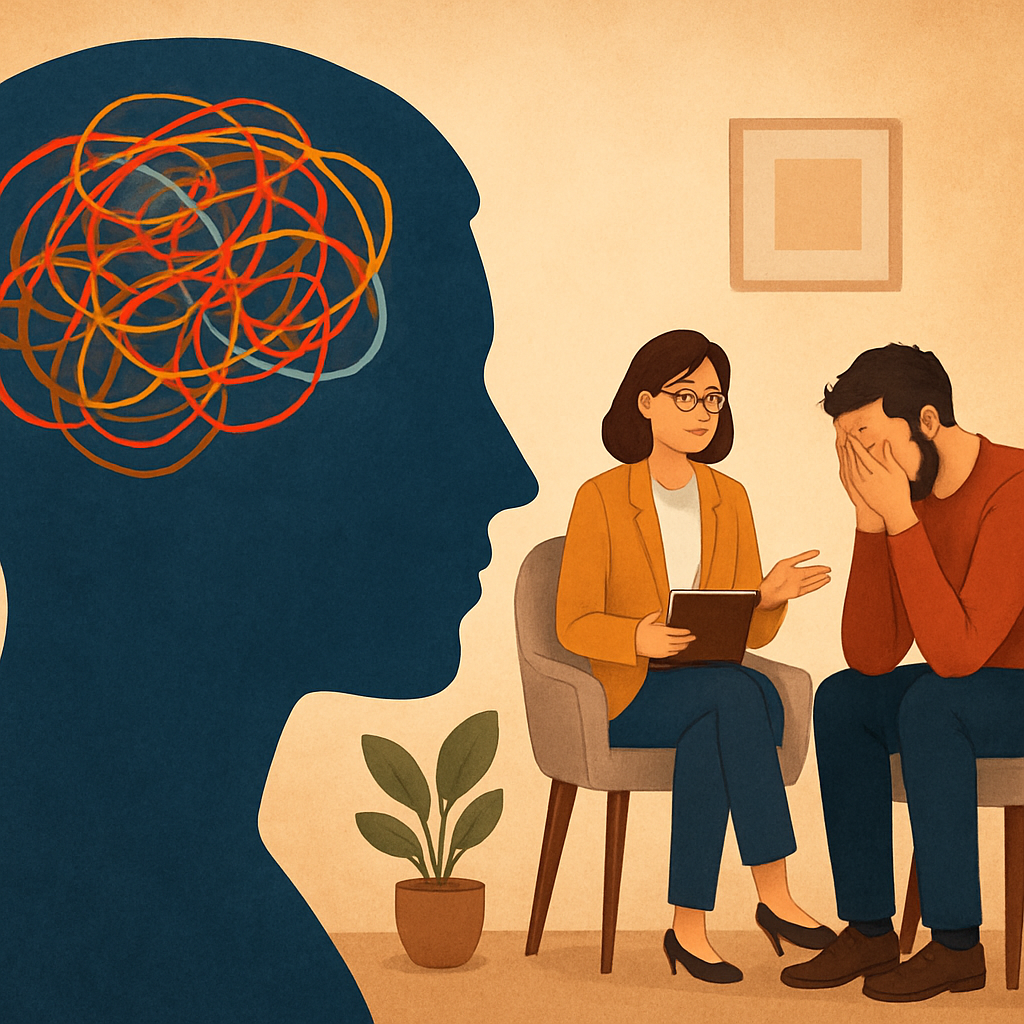
ADHD and trauma are distinct experiences, but in adults they often intersect in ways that reshape attention, mood, and daily behavior. When trauma disrupts sleep, arousal, and emotional regulation, it can magnify core ADHD symptoms like distractibility and forgetfulness. Conversely, longstanding ADHD patterns—impulsivity, seeking stimulation, and workarounds—can increase exposure to or the impact of traumatic events. Recognizing this interplay matters because it changes what you target in treatment and how quickly you regain steady routines.
Practical insight: do not rely on ADHD symptoms alone to explain everything. Trauma can mimic or worsen attention lapses and memory gaps, and hyperarousal from trauma can look like restlessness. A trade-off in practice is that an integrated assessment takes more time and coordination, but it yields a clearer map of what to treat first and how to sequence therapy. In the real world, patients benefit when clinicians assess both conditions together rather than chalking symptoms up to one label. Evidence supports integrated approaches, with CBT for ADHD and trauma processing endorsed by major bodies APA trauma resources and NIMH ADHD overview.
Concrete example: Alex, a 41-year-old marketing manager, has long struggled with focus and organizational lapses at work. After a severe car crash three years ago, he developed nightmares and daytime hypervigilance that intensified his distractibility. With an integrated plan that pairs CBT for ADHD with trauma processing, his concentration at work improved and sleep settled in, illustrating how dual treatment changes everyday performance.
Assessment and treatment should address both conditions in parallel, not as an afterthought. Clinicians can weave together evidence based approaches such as CBT for ADHD to sharpen executive function and EMDR or trauma informed CBT to process past events, while honoring any medication plan if appropriate. The goal is a coordinated strategy that reduces symptoms across attention, mood, and relationships rather than chasing one culprit while the other flares. This approach is practical in daily life because it targets how symptoms show up in work, dating, and routine tasks.
Takeaway: if you suspect both conditions, press for an integrated evaluation now and plan for a treatment path that addresses ADHD and trauma in parallel to improve real‑world functioning.
Trauma's Footprint on Attention, Memory, and Emotional Regulation
Trauma shifts the brain's arousal baseline, and in adults with ADHD that shift shows up as inconsistent attention, patchy concentration, and unsettled sleep. This isn't just fatigue; it's a neurobiological pattern that can masquerade as or amplify ADHD symptoms, changing how people handle meetings, deadlines, and everyday responsibilities.
Trauma also disrupts the networks that support working memory and planning. Chronic hyperarousal, intrusive memories, and disrupted sleep erode the brain's capacity to hold multiple steps in mind, switch tasks, or follow through on complex plans. The result: routines that once felt manageable suddenly feel overwhelming, even when medication helps with focus.
Consider Maria, a project manager with ADHD who survived childhood trauma. After a car accident last year, she experiences an afternoon crash: meetings drift, emails back up, and sleep becomes fragmented. She used to remember three-step processes; now she loses track mid-task and must recheck work multiple times, which fuels frustration and self-doubt.
Emotionally, trauma can heighten reactivity and impulsivity, making them look like symptoms of emotional dysregulation tied to ADHD. Hypervigilance keeps the brain in a constant state of alert, shortening patience and increasing tension in dating or coworker conversations. The pattern can fuel misreads of social cues, amplify rejection sensitivity, and tighten cycles of self-criticism.
- Practical strategy: Establish a consistent sleep routine and daytime structure to reduce attention variability and mood swings.
- External supports: Use reminders, checklists, and environmental tweaks to compensate for working-memory dips.
- Integrated therapies: Combine trauma-informed approaches (CBT for ADHD, EMDR) with ADHD-focused strategies to address both conditions together.
- Mindfulness and pacing: Short, regular mindfulness practice and gradual exposure to triggering tasks can lower reactivity and improve emotional regulation.
For further reading on related dynamics, explore how rejection sensitivity interacts with ADHD in adults: Understanding the Link Between Rejection Sensitivity Dysphoria and ADHD.
Takeaway: If you suspect that trauma is shaping your attention, memory, or sleep, pursue an integrated assessment and plan that combines trauma processing with ADHD management, rather than treating them as separate tracks.
ADHD as a Gateway for Trauma and Trauma's Amplification of ADHD Symptoms
Scenario: A 34-year-old with longstanding ADHD encounters a traumatic incident at work that unsettles sleep, spikes arousal, and sharpens emotional reactivity. Overnight, distractibility grows, deadlines slip, and arguments with colleagues become more volatile. This is not a one-off episode—it's a pattern where trauma amplifies core ADHD challenges in daily life.
Trauma can recalibrate the brain’s stress response and increase baseline arousal, which makes executive function tasks—planning, working memory, and task switching—even harder for someone who already struggles with focus. In adults with a history of ADHD, this intersection turns ordinary demands into heightened stress, triggering cycles of avoidance, rumination, and fragmented sleep.
- Increased exposure to trauma risk: Impulsivity and novelty seeking raise chances of risky situations and unsafe choices.
- Stress-accelerated cognitive load: Hypervigilance, sleep disruption, and ongoing rumination drain working memory and sustained attention.
- Emotion regulation loop: Trauma-related dysregulation compounds ADHD emotional dysregulation and reactivity, widening mood swings under pressure.
- Relationship and safety ripples: Rejection sensitivity and attachment issues magnify conflict and perceived threats in dating and at home.
Importantly, many adults present with symptoms that blur the line between ADHD and trauma responses. Ruling out comorbidity requires integrated assessment—screenings that cover ADHD alongside trauma indicators rather than a single-symptom focus. See the integrated approach in practice here: Understanding the Link Between Rejection Sensitivity Dysphoria and ADHD.
Concrete example: Maya, a 29-year-old with ADHD, starts dating again and gravitates toward high-risk situations. After a traumatic incident, she experiences flashbacks and sleep loss, which worsens her concentration at work. With an integrated plan—CBT for ADHD combined with trauma-focused processing—she learns grounding skills and gradually stabilizes her sleep and focus.
Clinicians should screen for both conditions and coordinate care to avoid fragmented treatment. In practice, expect to combine evidence-based modalities (CBT for ADHD alongside trauma-focused therapies such as EMDR or trauma-informed CBT) and consider medication when appropriate to support attention and regulation.
Next step: pursue an integrated assessment with a trauma-informed clinician to map how ADHD and trauma interact in daily life and to plan coordinated care that supports both attention and emotional regulation.
Signals You Might Have Both ADHD and Trauma
In adults, signals of ADHD and trauma often blend, and one can mask the other. You may notice that attention lapses come not only from distractibility but also from hyperarousal or intrusive memories. If symptoms spike after stress, you should consider both conditions rather than assuming one is the sole driver.
A practical way to interpret signals is to track timing: does attention worsen after trauma reminders? Do emotional outbursts occur in predictable patterns, or only after specific stressors? This helps differentiate cadence and drivers, which matters for choosing an integrated treatment plan.
- Inattention that worsens after stress or trauma reminders: attention drifts more after triggers.
- Emotional dysregulation: mood swings, irritability, or impulsive actions after reminders.
- Sleep disruption: trouble falling or staying asleep linked to hypervigilance.
- Executive function strain: planning or working memory performance drops during or after stressful periods.
- Behavioral patterns: avoidance, perfectionism, or impulsivity showing up in dating or work.
- Relationship cues: difficulty interpreting social cues or feeling overwhelmed in social settings.
Concrete example: Sam, a 38-year-old project manager, notices he can focus during morning standups but after a recent breakup he spirals into scattered task lists, misses deadlines, and interrupts teammates with impulsive ideas. The pattern suggests trauma-linked arousal is amplifying ADHD-like inattention, while structured task-tracking reveals underlying ADHD symptoms when stress is lower.
A common misstep is treating the two conditions as separate silos. Trauma responses can imitate ADHD symptoms, and ADHD can increase exposure to situations that provoke trauma. Without integrated screening, you might miss the real driver behind daily dysfunction, leading to partial treatment and persistent frustration.
To move forward, ask for an integrated assessment that considers both ADHD and trauma. Track symptom patterns, share your history of adverse experiences, and use validated tools to screen for both. For practical next steps, review resources on trauma-informed care and cognitive-behavioral strategies that address both conditions.
Takeaway: When ADHD and trauma intersect, the path to genuine improvement runs through integrated assessment and coordinated care—not isolated ADHD or trauma treatment.
Integrated Approaches to Assessment and Treatment
Integrated assessment is nonnegotiable when adhd and trauma co-occur in adults. Treating ADHD in isolation while ignoring trauma signals risks misdiagnosis, mismatched treatment, and persistent impairment across work, relationships, and sleep.
Begin with validated screening tools: the ASRS for ADHD symptoms and the PCL-5 for trauma-related distress. Combine these results with a thorough clinical interview focused on onset, trajectory, sleep patterns, arousal, and trauma history to build an integrated formulation that guides care rather than a checklist that keeps treatments siloed. For context on how trauma and attention-related symptoms intersect, see credible sources like NIMH ADHD overview and APA trauma resources.
- Screening and differential diagnosis: Use ASRS and PCL-5 to recognize co-occurring conditions and avoid mistaking trauma responses for ADHD symptoms.
- Integrated treatment plan: Combine CBT for ADHD with trauma processing strategies (EMDR, trauma-informed CBT); align with ACT or DBT if emotional regulation is a central goal.
- Medication coordination: When appropriate, coordinate pharmacotherapy with therapy; monitor sleep, anxiety, and mood symptoms; adjust for trauma-related sleep disturbances.
- Delivery model: Use flexible options (in-person and teletherapy) to improve access; ensure continuity and safety when addressing trauma exposure in daily life.
- Progress monitoring: Track functional outcomes (work performance, relationships, sleep) alongside symptom checklists to measure real-world impact.
A practical reality: many clinics throw a lot of promising modalities at once, then struggle with sequencing. The trade-off is pacing — you need stabilization first, then processing, so the client isn’t overwhelmed. Also, not all providers offer EMDR or trauma-informed CBT in every setting; teletherapy can expand access but requires careful safety planning.
Concrete Example: A 42-year-old project manager reports chronic distractibility and irregular sleep. An integrated assessment yields high ASRS scores and a PCL-5 indicating prior childhood trauma; the plan pairs brief CBT for ADHD with EMDR, with medications considered later if sleep improves. After eight weeks, he notes better task initiation at work and fewer intrusive memories.
The practical takeaway is to demand an integrated assessment early and to pursue a care plan that combines evidence-based ADHD and trauma therapies rather than treating them in isolation. Ask your clinician how they coordinate CBT, EMDR, and any medications to support daily life and dating goals.
Practical Steps to Improve Daily Life and Relationships
Practical life management matters most when ADHD and trauma intersect. You don’t win by sheer willpower—you win with predictable structure that anchors attention, reduces emotional reactivity, and supports self-regulation in the mess of daily life. This section offers concrete steps you can start applying at work, at home, and in dating, with evidence-based ideas you can implement without reinventing your entire routine.
Build Reliable Daily Structures
Reliable routines aren’t about rigidity; they create safe cues your brain can rely on during spikes of stress or drift in focus. Begin with a simple morning ritual and a planning session that explicitly accounts for ADHD symptoms and trauma responses—short tasks, external reminders, and built-in buffers for slower start times or anxiety. If sleep is unreliable, fix that first because sleep quality shapes attention, mood, and the brain’s stress response.
- External reminders and environmental cues: Use alarms, sticky notes, calendar alerts to prompt the next step.
- Time boxing with micro-steps: Break tasks into 5- to 10-minute chunks, complete each before moving on.
- Emotion check-ins: Schedule brief mood checks to pause before reactions and choose regulated responses.
- Communication scripts for dating/partners: Prepare short phrases to express needs or boundaries when overwhelmed.
- Weekly review: End-of-week reflection of what worked, what didn't, and adjustments for next week.
Key principle: Consistency beats bursts of effort when ADHD and trauma intersect.
| Strategy | Impact |
|---|---|
| External reminders and environmental cues | Reduces memory load and supports task initiation |
| Time boxing with micro-steps | Increases sustained attention and reduces overwhelm |
| Emotion regulation check-ins | Stabilizes mood and lowers impulsive responses |
Takeaway: Start small—choose one routine to implement for two weeks, track its effects on sleep, irritability, and focus, and use those results to decide on pursuing an integrated care plan. For relationships challenges or loneliness, consider the resources at Therapy for Adulting, such as the article on loneliness and ADHD: Why Adults with ADHD Feel So Lonely — and How Therapy Helps You Finally Connect.