
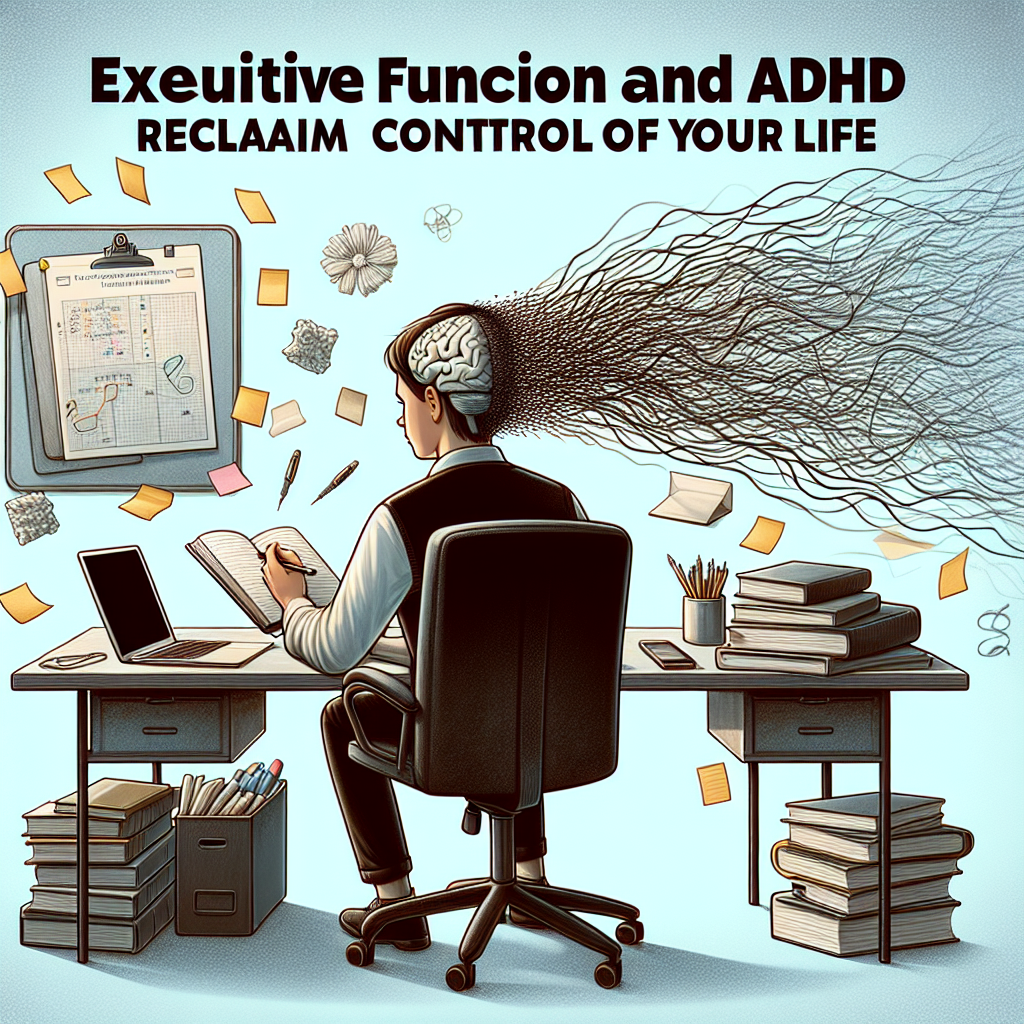
Executive Function and ADHD: Reclaim Control of Your Life
Understanding ADHD Through the Lens of Executive Function
ADHD significantly impacts executive function, which encompasses cognitive processes that allow for planning, organization, and goal-directed behavior. Individuals with ADHD often experience deficits in these areas, which can hinder their ability to manage daily tasks effectively.
Defining executive function in the context of ADHD
Executive function is critical for self-regulation and decision-making. Those with ADHD may struggle with working memory, impulse control, and flexible thinking. This means they might find it difficult to prioritize tasks or adapt to changing situations, leading to frustration in both personal and professional settings.
How executive function deficits manifest in daily life
In practical terms, deficits in executive function can lead to chronic disorganization. For instance, an adult with ADHD might forget appointments or miss deadlines due to poor time management skills. They may start multiple projects without completing any because they struggle to maintain focus on a single task.
- Difficulty keeping track of personal belongings.
- Struggles with following through on commitments.
- Challenges in maintaining a consistent routine.
The impact of executive function on emotional regulation
“Emotional dysregulation is another common consequence of impaired executive function. Individuals may experience heightened emotional responses or difficulty managing frustration and anxiety. This can lead to conflicts in relationships or challenges at work as emotions override rational decision-making.
“Understanding these connections is crucial for developing effective coping strategies tailored for adults with ADHD.
“Most teams misinterpret the nature of these challenges by attributing them solely to lack of effort or motivation. In reality, the interplay between ADHD and executive function requires targeted interventions that address cognitive deficits rather than simply pushing for better performance.
Neurobiological Underpinnings of Executive Function in ADHD
The neurobiological basis of executive function in individuals with ADHD is complex, involving specific brain regions that play critical roles in cognitive control. The prefrontal cortex, responsible for decision-making and impulse control, is often underactive in those with ADHD. This underactivity can lead to difficulties in planning and executing tasks, which are essential components of effective executive function.
Brain regions involved in executive function and their relevance to ADHD
Research indicates that the anterior cingulate cortex (ACC) and the dorsolateral prefrontal cortex (DLPFC) are particularly relevant to executive functioning. The ACC is crucial for error detection and emotional regulation, while the DLPFC is involved in working memory and cognitive flexibility. Dysfunction in these areas can exacerbate the challenges faced by individuals with ADHD, leading to persistent issues such as difficulty prioritizing tasks or managing time effectively.
Neurotransmitter systems and their influence on executive control
Dopamine and norepinephrine are two neurotransmitters that significantly influence executive function. In individuals with ADHD, dysregulation of these neurotransmitter systems can result in impaired attention and motivation. For instance, medications like stimulants work by increasing dopamine levels, which can enhance focus and improve overall cognitive performance. However, reliance on medication alone without accompanying behavioral strategies often leads to suboptimal outcomes.
Genetic factors contributing to executive function challenges
'Genetic predispositions also play a role in the executive function deficits seen in ADHD. Studies have identified specific gene variants associated with dopamine regulation that may contribute to the severity of symptoms. Understanding these genetic factors can help tailor interventions more effectively but doesn't negate the need for comprehensive treatment approaches that include environmental modifications and skills training.'
Most teams misjudge the effectiveness of pharmacological treatments by assuming they will resolve all issues related to executive dysfunction without considering behavioral interventions.
Assessment Techniques for Evaluating Executive Functioning
Standardized tests for assessing executive function are essential for identifying specific deficits in individuals with ADHD. These tests, such as the Behavior Rating Inventory of Executive Function (BRIEF) and the Delis-Kaplan Executive Function System (D-KEFS), provide quantitative data that can help clinicians understand the extent of executive function impairments. They are particularly effective when used in conjunction with behavioral assessments.
Behavioral Assessments and Observational Strategies
Behavioral assessments, which include structured interviews and observational strategies, offer qualitative insights into how executive function deficits manifest in daily life. These methods allow for a holistic view of an individual's functioning across various contexts, such as home and work environments. However, these assessments can be subjective and may depend heavily on the observer's interpretation, leading to potential biases.
Self-Report Tools and Their Effectiveness
Self-report tools like the Adult ADHD Self-Report Scale (ASRS) provide valuable perspectives from individuals regarding their own experiences with executive dysfunction. While these tools can capture personal insights effectively, they are often limited by self-awareness issues; individuals may downplay their difficulties or misinterpret their behaviors. This limitation can skew results and mislead treatment approaches.
- Standardized tests offer quantitative data but may not capture contextual factors.
- Behavioral assessments provide qualitative insights but risk observer bias.
- Self-report tools reflect personal experiences but can be influenced by self-perception.
Integrating multiple assessment methods is crucial for a comprehensive understanding of executive function deficits in ADHD.
Teams often misjudge the effectiveness of standardized tests alone, believing they provide a complete picture without considering contextual factors or individual experiences. This oversight can lead to inadequate intervention strategies that fail to address specific needs.
Cognitive Behavioral Strategies for Improving Executive Function
Cognitive behavioral strategies can significantly enhance executive function in adults with ADHD, particularly when tailored to individual needs. These strategies are best suited for individuals who struggle with self-regulation, time management, and organization. By implementing structured frameworks and techniques, these individuals can reclaim control over their daily lives.
Goal-setting frameworks tailored for adults with ADHD
Effective goal-setting frameworks are crucial for individuals with ADHD as they provide clarity and direction. The SMART (Specific, Measurable, Achievable, Relevant, Time-bound) criteria can be particularly beneficial. However, a common limitation is that these frameworks can become overwhelming if too many goals are set simultaneously. For instance, an adult may establish multiple SMART goals across various life domains—work, health, and relationships—leading to frustration rather than progress.
- Break down larger goals into smaller, actionable steps.
- Regularly review progress to maintain motivation.
In practice, a professional might set a SMART goal to complete a work project by breaking it into weekly milestones. Each milestone would have specific tasks that lead to the overall completion of the project. This approach not only clarifies expectations but also allows for adjustments as needed.
Time management techniques that enhance executive functioning
Time blocking is a highly effective time management technique for those with ADHD. It involves allocating specific blocks of time to different tasks or activities throughout the day. However, many underestimate the need for flexibility within this structure; rigid adherence can lead to increased anxiety when unexpected events arise.
- 'Use timers or alarms to signal transitions between tasks.
- 'Incorporate buffer times between blocks to accommodate overruns or breaks.
'For example, an individual might schedule two hours in the morning solely for focused work on a report. They could set a timer for each hour and take a ten-minute break afterward to recharge before moving on to the next task. This method not only enhances focus but also reduces the likelihood of burnout.
'Organizational skills training and its role in daily functioning
'Organizational skills training plays a pivotal role in improving daily functioning for adults with ADHD. Techniques such as using planners or digital tools can aid in maintaining organization over time. However, reliance on technology without developing personal organizational habits often leads to failure; tools cannot compensate for poor habits.