
ADHD Coping Skills for Adults: Essential Tools for Everyday Challenges
Understanding Executive Functioning Deficits
Ever tried to juggle three flaming torches while riding a unicycle? That’s what navigating daily life can feel like for adults with ADHD, especially when executive functioning deficits come into play. These deficits can turn simple tasks into Herculean challenges, making it difficult to plan, prioritize, and follow through.
A staggering 50% of adults with ADHD report significant issues with executive functioning. This isn’t just about forgetting where you left your keys; it’s about the mental processes that help you manage time effectively, stay organized, and regulate emotions. Without these skills, even the most straightforward tasks can spiral into chaos.
The Role of Executive Functioning
Think of executive functioning as the brain's air traffic control system. It helps manage all sorts of cognitive processes — from decision-making to impulse control — ensuring everything runs smoothly. But when this system is malfunctioning, it’s like a storm hits the airport: flights get delayed, chaos ensues, and no one knows what’s going on.
For many adults grappling with ADHD coping skills for adults, this manifests in various ways: struggling to complete projects at work on time, feeling overwhelmed by clutter at home, or even finding it tough to stick to a routine. It’s not laziness; it’s a genuine cognitive struggle.
Common Signs of Executive Functioning Deficits
- Difficulty organizing tasks or materials.
- Challenges in prioritizing responsibilities.
- Struggles with time management.
- Problems starting or completing tasks.
- Frequent forgetfulness regarding appointments or deadlines.
So what does this mean for daily life? you might ask. Well, imagine being an adult who constantly feels like they're playing catch-up while others seem to glide effortlessly through their day. This can lead to feelings of frustration and inadequacy.
Key takeaway: Executive functioning deficits are not a reflection of your intelligence or capabilities; they are challenges that require specific strategies and coping mechanisms.
But Wait! Isn’t It Just Procrastination?
Isn’t everyone just procrastinating? This is a common misconception. While procrastination can be part of the equation for anyone facing overwhelming tasks, for those with ADHD and executive functioning deficits, it's often rooted in an inability to organize thoughts or manage time effectively rather than mere laziness.
Take Sarah, for example — a marketing professional who struggles with prioritizing her workload. She might start her day full of good intentions but finds herself scrolling through social media instead of tackling her project deadlines. This isn’t because she doesn’t want to work; it’s because she feels paralyzed by choice and overwhelmed by the prospect of starting something that feels too big.
Ever tried to juggle three flaming torches while riding a unicycle? That’s what navigating daily life can feel like for adults with ADHD, especially when executive functioning deficits come into play. These deficits can turn simple tasks into Herculean challenges, making it difficult to plan, prioritize, and follow through.
A staggering 50% of adults with ADHD report significant issues with executive functioning. This isn’t just about forgetting where you left your keys; it’s about the mental processes that help you manage time effectively, stay organized, and regulate emotions. Without these skills, even the most straightforward tasks can spiral into chaos.
The Role of Executive Functioning
Think of executive functioning as the brain's air traffic control system. It helps manage all sorts of cognitive processes — from decision-making to impulse control — ensuring everything runs smoothly. But when this system is malfunctioning, it’s like a storm hits the airport: flights get delayed, chaos ensues, and no one knows what’s going on.
For many adults grappling with ADHD coping skills for adults, this manifests in various ways: struggling to complete projects at work on time, feeling overwhelmed by clutter at home, or even finding it tough to stick to a routine. It’s not laziness; it’s a genuine cognitive struggle.
Common Signs of Executive Functioning Deficits
- Difficulty organizing tasks or materials.
- Challenges in prioritizing responsibilities.
- Struggles with time management.
- Problems starting or completing tasks.
- Frequent forgetfulness regarding appointments or deadlines.
So what does this mean for daily life? you might ask. Well, imagine being an adult who constantly feels like they're playing catch-up while others seem to glide effortlessly through their day. This can lead to feelings of frustration and inadequacy.
Key takeaway: Executive functioning deficits are not a reflection of your intelligence or capabilities; they are challenges that require specific strategies and coping mechanisms.
But Wait! Isn’t It Just Procrastination?
Isn’t everyone just procrastinating? This is a common misconception. While procrastination can be part of the equation for anyone facing overwhelming tasks, for those with ADHD and executive functioning deficits, it's often rooted in an inability to organize thoughts or manage time effectively rather than mere laziness.
Take Sarah, for example — a marketing professional who struggles with prioritizing her workload. She might start her day full of good intentions but finds herself scrolling through social media instead of tackling her project deadlines. This isn’t because she doesn’t want to work; it’s because she feels paralyzed by choice and overwhelmed by the prospect of starting something that feels too big.
Time Management Techniques Tailored for ADHD
Feeling like time is a slippery fish that just won’t stay caught? For adults with ADHD, managing time can feel like trying to herd cats. But fear not! There are specific techniques designed to make the clock your ally, not your enemy.
A study from the Journal of Attention Disorders reveals that nearly 70% of adults with ADHD struggle with time management. This isn’t just about being late; it’s about feeling perpetually behind the eight ball, impacting everything from work performance to personal relationships.
1. The Pomodoro Technique: Bite-Sized Focus
Imagine trying to tackle a mountain of paperwork all at once — daunting, right? Enter the Pomodoro Technique, a game-changer for those who get easily overwhelmed. Set a timer for 25 minutes and dive into one task. Once the timer goes off, take a five-minute break. Repeat this cycle four times and then reward yourself with a longer break. It’s like giving your brain a mini vacation while still getting stuff done!
2. Visual Timers: Seeing is Believing
For many adults with ADHD, abstract concepts like time can feel elusive. A visual timer turns this abstract idea into something tangible. Whether it’s an hourglass or a digital timer that shows how much time is left in bright colors, having something you can see helps anchor you in reality and keeps procrastination at bay.
3. Task Batching: Less Is More
Why do today what you can put off until tomorrow? might be your inner voice's motto — but let’s flip that script! Task batching involves grouping similar tasks together to minimize context switching (the bane of productivity). For instance, if you have emails to send, calls to make, and reports to write, do them all in one go rather than hopping around between different types of tasks.
Focus on one thing at a time; multitasking is often just another form of procrastination.
The Two-Minute Rule: Small Wins Matter
If it takes less than two minutes to do, do it now! This golden nugget from productivity guru David Allen is especially useful for adults struggling with ADHD coping skills for adults. Tackling small tasks immediately can create momentum and clear your mental space for bigger projects.
So what’s next? you might ask. Start small by picking one technique that resonates with you and give it a try this week! Time management doesn’t have to be an insurmountable challenge; with the right tools in your toolkit, you’ll find yourself navigating daily life more smoothly.
Feeling like time is a slippery fish that just won’t stay caught? For adults with ADHD, managing time can feel like trying to herd cats. But fear not! There are specific techniques designed to make the clock your ally, not your enemy.
A study from the Journal of Attention Disorders reveals that nearly 70% of adults with ADHD struggle with time management. This isn’t just about being late; it’s about feeling perpetually behind the eight ball, impacting everything from work performance to personal relationships.
1. The Pomodoro Technique: Bite-Sized Focus
Imagine trying to tackle a mountain of paperwork all at once — daunting, right? Enter the Pomodoro Technique, a game-changer for those who get easily overwhelmed. Set a timer for 25 minutes and dive into one task. Once the timer goes off, take a five-minute break. Repeat this cycle four times and then reward yourself with a longer break. It’s like giving your brain a mini vacation while still getting stuff done!
2. Visual Timers: Seeing is Believing
For many adults with ADHD, abstract concepts like time can feel elusive. A visual timer turns this abstract idea into something tangible. Whether it’s an hourglass or a digital timer that shows how much time is left in bright colors, having something you can see helps anchor you in reality and keeps procrastination at bay.
3. Task Batching: Less Is More
Why do today what you can put off until tomorrow? might be your inner voice's motto — but let’s flip that script! Task batching involves grouping similar tasks together to minimize context switching (the bane of productivity). For instance, if you have emails to send, calls to make, and reports to write, do them all in one go rather than hopping around between different types of tasks.
Focus on one thing at a time; multitasking is often just another form of procrastination.
The Two-Minute Rule: Small Wins Matter
If it takes less than two minutes to do, do it now! This golden nugget from productivity guru David Allen is especially useful for adults struggling with ADHD coping skills for adults. Tackling small tasks immediately can create momentum and clear your mental space for bigger projects.
So what’s next? you might ask. Start small by picking one technique that resonates with you and give it a try this week! Time management doesn’t have to be an insurmountable challenge; with the right tools in your toolkit, you’ll find yourself navigating daily life more smoothly.
Organizational Tools and Strategies
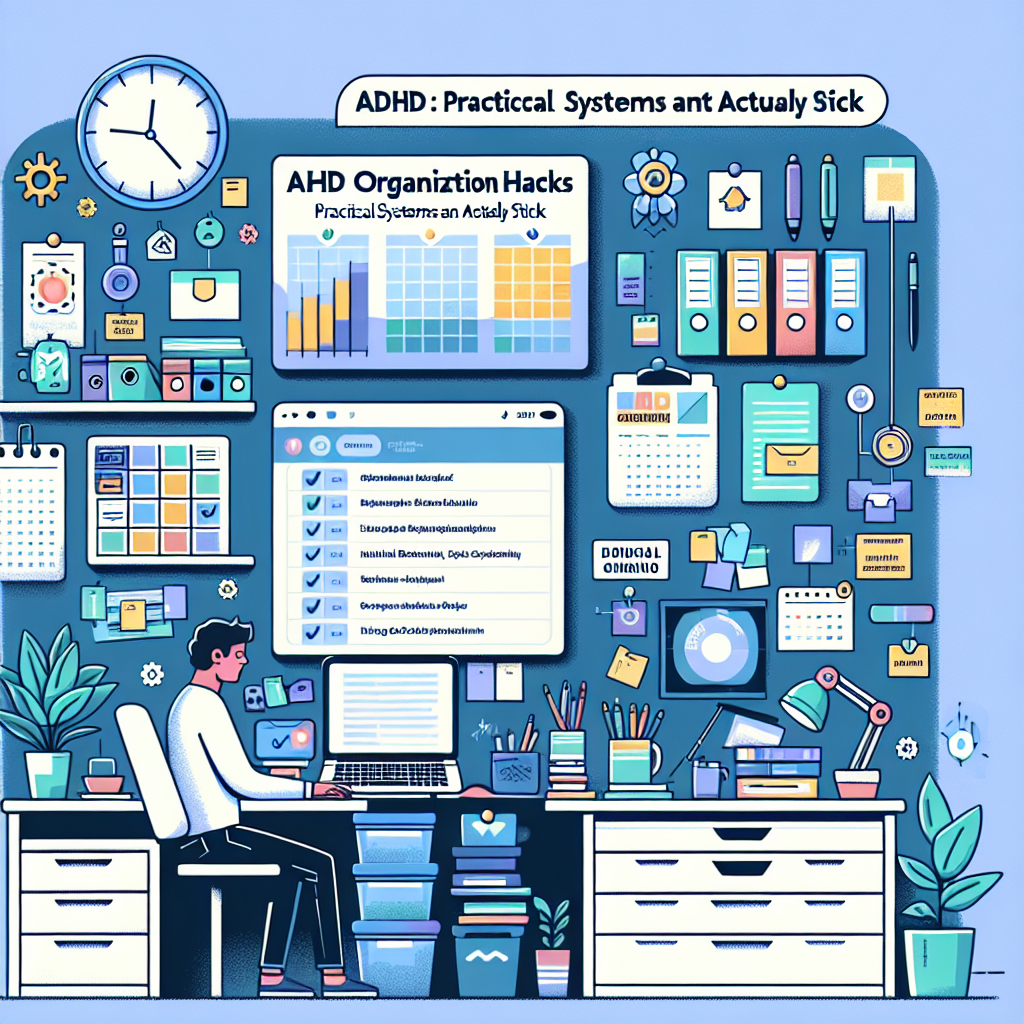
Imagine walking into your home office and feeling like you’ve just stepped into a tornado. Papers are strewn everywhere, your to-do list is a mile long, and the thought of organizing it all feels like climbing Everest without oxygen. For adults navigating ADHD coping skills for adults, this chaotic scene is all too familiar.
A staggering 70% of adults with ADHD report that disorganization impacts their productivity. This isn’t just a minor inconvenience; it’s a daily battle that can lead to missed deadlines and forgotten commitments. But fear not! Organizational tools and strategies are here to rescue you from the chaos.
Digital Tools for the Win
In today’s tech-savvy world, leveraging digital tools can be a game changer. Applications like Todoist or Trello turn overwhelming tasks into manageable lists with delightful checkboxes. They help you visualize what needs to be done without the clutter of sticky notes or scraps of paper.
- Todoist: A task manager that lets you categorize tasks by project and due date.
- Trello: A visual board that helps you track projects using cards and lists.
- Evernote: Perfect for capturing ideas and notes on-the-go.
Pro tip: Set reminders in these apps to keep tasks front-of-mind!
Physical Organization Hacks
Out of sight, out of mind is often true for those with ADHD. Therefore, creating an organized physical space can significantly enhance focus. Start by decluttering your workspace — think Marie Kondo but with less sparkle. Keep only what you need within arm’s reach.
- Use drawer organizers to separate office supplies.
- One in, one out rule: For every new item you bring in, let go of an old one.
- [Color-code] folders or labels to easily find documents.
Establishing routines might sound boring, but they’re crucial for adults managing ADHD coping skills for adults. By creating predictable patterns in your day-to-day life, you reduce decision fatigue — which is a real energy drainer.
Consider morning rituals or designated times for specific tasks (like checking emails). These small adjustments can create a sense of normalcy amidst the chaos.
Remember that organizational tools are not one-size-fits-all; it’s about finding what clicks for you! Test different strategies until something sticks. And don’t forget — Rome wasn’t built in a day; patience is key as you refine your approach.
Imagine walking into your home office and feeling like you’ve just stepped into a tornado. Papers are strewn everywhere, your to-do list is a mile long, and the thought of organizing it all feels like climbing Everest without oxygen. For adults navigating ADHD coping skills for adults, this chaotic scene is all too familiar.
A staggering 70% of adults with ADHD report that disorganization impacts their productivity. This isn’t just a minor inconvenience; it’s a daily battle that can lead to missed deadlines and forgotten commitments. But fear not! Organizational tools and strategies are here to rescue you from the chaos.
Digital Tools for the Win
In today’s tech-savvy world, leveraging digital tools can be a game changer. Applications like Todoist or Trello turn overwhelming tasks into manageable lists with delightful checkboxes. They help you visualize what needs to be done without the clutter of sticky notes or scraps of paper.
- Todoist: A task manager that lets you categorize tasks by project and due date.
- Trello: A visual board that helps you track projects using cards and lists.
- Evernote: Perfect for capturing ideas and notes on-the-go.
Pro tip: Set reminders in these apps to keep tasks front-of-mind!
Physical Organization Hacks
Out of sight, out of mind is often true for those with ADHD. Therefore, creating an organized physical space can significantly enhance focus. Start by decluttering your workspace — think Marie Kondo but with less sparkle. Keep only what you need within arm’s reach.
- Use drawer organizers to separate office supplies.
- One in, one out rule: For every new item you bring in, let go of an old one.
- [Color-code] folders or labels to easily find documents.
Establishing routines might sound boring, but they’re crucial for adults managing ADHD coping skills for adults. By creating predictable patterns in your day-to-day life, you reduce decision fatigue — which is a real energy drainer.
Consider morning rituals or designated times for specific tasks (like checking emails). These small adjustments can create a sense of normalcy amidst the chaos.
Remember that organizational tools are not one-size-fits-all; it’s about finding what clicks for you! Test different strategies until something sticks. And don’t forget — Rome wasn’t built in a day; patience is key as you refine your approach.
Emotional Regulation Skills for ADHD Adults
Ever found yourself spiraling into a whirlwind of emotions over a minor setback, like spilling coffee on your favorite shirt? For adults with ADHD, emotional regulation can feel like trying to tame a wild stallion — exhilarating yet utterly chaotic.
Research shows that nearly 70% of adults with ADHD experience intense emotional responses that can disrupt daily life. This isn’t just about feeling sad or angry; it’s about the rollercoaster of emotions that can lead to impulsive decisions or relationship struggles. The good news? There are effective emotional regulation skills specifically designed for adults navigating ADHD.
Understanding Emotional Triggers
Identifying what sets off your emotional reactions is the first step in gaining control. Think of it as being a detective in your own life. Are you more prone to emotional outbursts when you're tired, stressed, or overwhelmed by too many tasks? Recognizing these patterns helps you anticipate and manage emotional responses before they escalate.
- Feeling overwhelmed by noise or chaos.
- Struggling with feelings of inadequacy at work.
- Experiencing frustration when plans change unexpectedly.
Practical Strategies for Emotional Regulation
When emotions run high, let logic take the wheel. This old adage rings especially true for adults with ADHD. Here are some practical strategies to help you keep your cool:
- [Pause and Breathe]: When you feel an emotional wave crashing down, take a moment to pause. Deep breathing exercises can help center your thoughts and reduce immediate stress.
- [Practice Mindfulness]: Engaging in mindfulness techniques can ground you in the present moment and create space between feeling and reaction. Apps like Headspace or Calm offer guided sessions tailored for busy minds.
- [Journaling]: Writing down your feelings not only provides an outlet but also helps clarify what’s bothering you. It’s like having a heart-to-heart with yourself without judgment.
Emotional regulation is not about suppressing feelings; it’s about understanding and managing them.
The Power of Support Systems
It takes a village isn’t just for raising children; it applies to emotional health too! Surrounding yourself with supportive friends, family members, or even therapists who understand ADHD can make all the difference. They can provide perspective during emotionally charged moments and help you navigate through challenges.
So what’s next? Start by picking one strategy that resonates with you — whether it's journaling or practicing mindfulness — and incorporate it into your routine this week. With each small step, you'll find yourself more equipped to handle life's ups and downs.
Ever found yourself spiraling into a whirlwind of emotions over a minor setback, like spilling coffee on your favorite shirt? For adults with ADHD, emotional regulation can feel like trying to tame a wild stallion — exhilarating yet utterly chaotic.
Research shows that nearly 70% of adults with ADHD experience intense emotional responses that can disrupt daily life. This isn’t just about feeling sad or angry; it’s about the rollercoaster of emotions that can lead to impulsive decisions or relationship struggles. The good news? There are effective emotional regulation skills specifically designed for adults navigating ADHD.
Understanding Emotional Triggers
Identifying what sets off your emotional reactions is the first step in gaining control. Think of it as being a detective in your own life. Are you more prone to emotional outbursts when you're tired, stressed, or overwhelmed by too many tasks? Recognizing these patterns helps you anticipate and manage emotional responses before they escalate.
- Feeling overwhelmed by noise or chaos.
- Struggling with feelings of inadequacy at work.
- Experiencing frustration when plans change unexpectedly.
Practical Strategies for Emotional Regulation
When emotions run high, let logic take the wheel. This old adage rings especially true for adults with ADHD. Here are some practical strategies to help you keep your cool:
- [Pause and Breathe]: When you feel an emotional wave crashing down, take a moment to pause. Deep breathing exercises can help center your thoughts and reduce immediate stress.
- [Practice Mindfulness]: Engaging in mindfulness techniques can ground you in the present moment and create space between feeling and reaction. Apps like Headspace or Calm offer guided sessions tailored for busy minds.
- [Journaling]: Writing down your feelings not only provides an outlet but also helps clarify what’s bothering you. It’s like having a heart-to-heart with yourself without judgment.
Emotional regulation is not about suppressing feelings; it’s about understanding and managing them.
The Power of Support Systems
It takes a village isn’t just for raising children; it applies to emotional health too! Surrounding yourself with supportive friends, family members, or even therapists who understand ADHD can make all the difference. They can provide perspective during emotionally charged moments and help you navigate through challenges.
So what’s next? Start by picking one strategy that resonates with you — whether it's journaling or practicing mindfulness — and incorporate it into your routine this week. With each small step, you'll find yourself more equipped to handle life's ups and downs.
Building Support Networks and Accountability Structures
Imagine trying to climb a mountain without a guide — that’s what tackling ADHD can feel like without a solid support network. The journey can be steep, lonely, and downright overwhelming at times. But here’s the kicker: studies show that adults with ADHD who have strong social support are more likely to implement effective coping strategies and experience improved emotional well-being.
A common struggle for many adults dealing with ADHD is the feeling of isolation. You might find yourself staring at an endless to-do list, feeling like you’re the only one battling this beast. But guess what? You’re not alone! Building a support network can be your lifeline, providing not just encouragement but also accountability.
Why Support Networks Matter
Support networks do more than just provide a listening ear; they help create structure in your life. When you share your goals with others, it’s like putting on a safety harness before bungee jumping — it adds an element of security and motivation. Whether it’s friends, family members, or ADHD support groups, having people who understand your challenges can make a world of difference.
- Encouragement during tough times.
- Shared experiences that normalize your struggles.
- Accountability for sticking to goals.
- Access to resources and strategies from others who get it.
Creating Accountability Structures
I’ll start my project tomorrow can become a dangerous mantra for adults with ADHD. To combat procrastination, accountability structures are essential. This could mean partnering up with an accountability buddy or joining a group where everyone checks in on their progress regularly. Think of it as having a workout partner but for your life goals!
- [1] Find an accountability partner: Choose someone who understands your challenges and can motivate you without judgment.
- [2] Set specific goals together: Make sure these are clear and measurable so you both know what success looks like.
- [3] Schedule regular check-ins: Whether weekly or bi-weekly, these meetings can serve as mini pep talks to keep you on track.
Key takeaway: Building support networks and accountability structures is crucial for adults with ADHD coping skills; they provide motivation and help keep procrastination at bay.
But where do I find these people? you might wonder. Start by looking locally — community centers often host groups focused on mental health or ADHD awareness. Online platforms like Facebook or Reddit have vibrant communities where individuals share tips, stories, and encouragement.
As you build these connections, remember that vulnerability is strength! Sharing your struggles can foster deeper relationships while also helping others feel less alone in their own battles.
So what’s next? Take some time this week to reach out to someone you trust or look into local support groups online. The journey may still have its bumps, but with the right people by your side, you'll find it's much easier to navigate!
Imagine trying to climb a mountain without a guide — that’s what tackling ADHD can feel like without a solid support network. The journey can be steep, lonely, and downright overwhelming at times. But here’s the kicker: studies show that adults with ADHD who have strong social support are more likely to implement effective coping strategies and experience improved emotional well-being.
A common struggle for many adults dealing with ADHD is the feeling of isolation. You might find yourself staring at an endless to-do list, feeling like you’re the only one battling this beast. But guess what? You’re not alone! Building a support network can be your lifeline, providing not just encouragement but also accountability.
Why Support Networks Matter
Support networks do more than just provide a listening ear; they help create structure in your life. When you share your goals with others, it’s like putting on a safety harness before bungee jumping — it adds an element of security and motivation. Whether it’s friends, family members, or ADHD support groups, having people who understand your challenges can make a world of difference.
- Encouragement during tough times.
- Shared experiences that normalize your struggles.
- Accountability for sticking to goals.
- Access to resources and strategies from others who get it.
Creating Accountability Structures
I’ll start my project tomorrow can become a dangerous mantra for adults with ADHD. To combat procrastination, accountability structures are essential. This could mean partnering up with an accountability buddy or joining a group where everyone checks in on their progress regularly. Think of it as having a workout partner but for your life goals!
- [1] Find an accountability partner: Choose someone who understands your challenges and can motivate you without judgment.
- [2] Set specific goals together: Make sure these are clear and measurable so you both know what success looks like.
- [3] Schedule regular check-ins: Whether weekly or bi-weekly, these meetings can serve as mini pep talks to keep you on track.
Key takeaway: Building support networks and accountability structures is crucial for adults with ADHD coping skills; they provide motivation and help keep procrastination at bay.
But where do I find these people? you might wonder. Start by looking locally — community centers often host groups focused on mental health or ADHD awareness. Online platforms like Facebook or Reddit have vibrant communities where individuals share tips, stories, and encouragement.
As you build these connections, remember that vulnerability is strength! Sharing your struggles can foster deeper relationships while also helping others feel less alone in their own battles.
So what’s next? Take some time this week to reach out to someone you trust or look into local support groups online. The journey may still have its bumps, but with the right people by your side, you'll find it's much easier to navigate!
Self-Care Practices to Mitigate ADHD Symptoms
Ever tried to calm a hyper puppy while juggling your morning coffee? That’s how it can feel when managing ADHD symptoms without proper self-care. Adults with ADHD often face a unique set of challenges that can leave them feeling frazzled and overwhelmed. But here’s the kicker: self-care isn’t just a buzzword; it’s a lifeline.
Research shows that nearly 60% of adults with ADHD report experiencing chronic stress, which exacerbates their symptoms. So, what can you do to combat this? Let’s explore some practical self-care strategies that not only help mitigate ADHD symptoms but also enhance overall well-being.
Mindfulness and Meditation: Finding Your Zen
Mindfulness isn’t just for yogis in serene settings. For adults with ADHD, practicing mindfulness can be like adding a superpower to your toolkit. It helps anchor you in the present moment and reduces the mental chaos that often comes with racing thoughts.
Consider starting with just five minutes of focused breathing each day. Apps like Headspace or Calm offer guided sessions tailored for busy minds, turning even the most chaotic mornings into moments of peace.
Physical Activity: Move to Improve
Exercise is like magic for your brain — and science backs it up! Regular physical activity releases endorphins, which can boost mood and improve focus. You don’t need to run a marathon; even a brisk walk around the block can work wonders.
- Try dancing in your living room — no judgment!
- Join a local sports league or fitness class.
- [Set reminders] on your phone to get moving throughout the day.
[Nutrition: Fuel Your Brain]
[Eating well] might sound cliché, but nutrition plays a vital role in managing ADHD symptoms. Incorporating omega-3 fatty acids (found in fish and flaxseeds) and staying hydrated can significantly impact focus and energy levels.
Ever tried to calm a hyper puppy while juggling your morning coffee? That’s how it can feel when managing ADHD symptoms without proper self-care. Adults with ADHD often face a unique set of challenges that can leave them feeling frazzled and overwhelmed. But here’s the kicker: self-care isn’t just a buzzword; it’s a lifeline.
Research shows that nearly 60% of adults with ADHD report experiencing chronic stress, which exacerbates their symptoms. So, what can you do to combat this? Let’s explore some practical self-care strategies that not only help mitigate ADHD symptoms but also enhance overall well-being.
Mindfulness and Meditation: Finding Your Zen
Mindfulness isn’t just for yogis in serene settings. For adults with ADHD, practicing mindfulness can be like adding a superpower to your toolkit. It helps anchor you in the present moment and reduces the mental chaos that often comes with racing thoughts.
Consider starting with just five minutes of focused breathing each day. Apps like Headspace or Calm offer guided sessions tailored for busy minds, turning even the most chaotic mornings into moments of peace.
Physical Activity: Move to Improve
Exercise is like magic for your brain — and science backs it up! Regular physical activity releases endorphins, which can boost mood and improve focus. You don’t need to run a marathon; even a brisk walk around the block can work wonders.
- Try dancing in your living room — no judgment!
- Join a local sports league or fitness class.
- [Set reminders] on your phone to get moving throughout the day.
[Nutrition: Fuel Your Brain]
[Eating well] might sound cliché, but nutrition plays a vital role in managing ADHD symptoms. Incorporating omega-3 fatty acids (found in fish and flaxseeds) and staying hydrated can significantly impact focus and energy levels.
Coping with Workplace Challenges Specific to ADHD
Ever felt like your brain is running a marathon while everyone else is just casually strolling through the park? For adults with ADHD, workplace challenges can feel like navigating a minefield of distractions, deadlines, and disorganization. It’s not just about staying focused; it's about managing the chaos that comes with it.
Research indicates that nearly 80% of adults with ADHD face significant challenges in workplace settings, from struggling to keep track of tasks to feeling overwhelmed by constant interruptions. This isn’t just a personal hurdle; it can impact productivity and job satisfaction.
Identifying Common Workplace Challenges
Let’s break down some of the most common challenges faced by adults with ADHD in the workplace:
- Difficulty prioritizing tasks, leading to missed deadlines.
- Struggles with maintaining focus during meetings or lengthy presentations.
- Challenges in organizing workspaces, resulting in lost items and forgotten tasks.
- Feeling overwhelmed by multitasking demands or frequent interruptions.
Key takeaway: Recognizing these challenges is the first step towards implementing effective strategies.
Strategies for Navigating Workplace Challenges
So what can you do? you might wonder. Here are some practical strategies tailored for adults grappling with ADHD coping skills for adults:
The Power of Accountability
Accountability partners aren’t just for workout buddies; they can be game-changers in the workplace too! Find a colleague who understands your challenges and schedule regular check-ins to discuss progress on tasks and goals. It’s like having a built-in cheerleader who helps keep procrastination at bay.
So what’s next? Consider picking one strategy from this list that resonates with you and give it a whirl this week! Remember, small changes can lead to significant improvements in how you navigate workplace challenges.
Ever felt like your brain is running a marathon while everyone else is just casually strolling through the park? For adults with ADHD, workplace challenges can feel like navigating a minefield of distractions, deadlines, and disorganization. It’s not just about staying focused; it's about managing the chaos that comes with it.
Research indicates that nearly 80% of adults with ADHD face significant challenges in workplace settings, from struggling to keep track of tasks to feeling overwhelmed by constant interruptions. This isn’t just a personal hurdle; it can impact productivity and job satisfaction.
Identifying Common Workplace Challenges
Let’s break down some of the most common challenges faced by adults with ADHD in the workplace:
- Difficulty prioritizing tasks, leading to missed deadlines.
- Struggles with maintaining focus during meetings or lengthy presentations.
- Challenges in organizing workspaces, resulting in lost items and forgotten tasks.
- Feeling overwhelmed by multitasking demands or frequent interruptions.
Key takeaway: Recognizing these challenges is the first step towards implementing effective strategies.
Strategies for Navigating Workplace Challenges
So what can you do? you might wonder. Here are some practical strategies tailored for adults grappling with ADHD coping skills for adults:
The Power of Accountability
Accountability partners aren’t just for workout buddies; they can be game-changers in the workplace too! Find a colleague who understands your challenges and schedule regular check-ins to discuss progress on tasks and goals. It’s like having a built-in cheerleader who helps keep procrastination at bay.
So what’s next? Consider picking one strategy from this list that resonates with you and give it a whirl this week! Remember, small changes can lead to significant improvements in how you navigate workplace challenges.
Enhancing Relationships through Understanding ADHD
Ever had a conversation that felt like you were speaking two different languages? For many adults with ADHD, this is a daily reality in their relationships. The challenges of ADHD can create misunderstandings and friction, leaving partners feeling frustrated and disconnected.
A study published in the Journal of Attention Disorders found that nearly 50% of adults with ADHD report difficulty in maintaining healthy relationships. This isn’t just about forgetting anniversaries or losing track of conversations; it’s about the emotional rollercoaster that can ensue when one partner feels overwhelmed while the other struggles to keep up.
Understanding Your Partner’s Perspective
Imagine being in a relationship where your partner often forgets important dates or gets easily distracted during conversations. It’s easy to feel neglected or unimportant. However, understanding that these behaviors stem from ADHD can shift the narrative. Instead of viewing your partner's actions as careless, recognizing them as symptoms of a neurological condition can foster empathy.
For instance, consider Mark and Lisa. Mark has ADHD and often interrupts Lisa mid-sentence because he’s eager to contribute but struggles with impulse control. Initially, Lisa felt dismissed and unappreciated. But once they discussed Mark's condition openly, she learned to recognize his interruptions as part of his struggle rather than a personal affront.
Communication Strategies for Couples
- Establish clear signals: Create non-verbal cues to indicate when one person feels overwhelmed or needs a moment.
- Practice active listening: Encourage each other to paraphrase what was said to ensure understanding.
- [Schedule check-ins]: Regularly set aside time to discuss feelings and concerns without distractions.
Key takeaway: Open communication about ADHD can significantly enhance relationship dynamics by fostering understanding and empathy.
[Building Emotional Resilience Together]
[Navigating the emotional landscape] together is crucial for couples dealing with ADHD. It’s not just about coping with symptoms; it’s about building resilience as a unit. This could mean attending therapy together, exploring coping strategies for stress management, or simply finding activities that strengthen your bond.
So what’s next? Start by having an open dialogue with your partner about how ADHD affects both of you. Consider scheduling regular check-ins to discuss feelings and frustrations — it might just be the foundation for deeper connection and understanding!
Ever had a conversation that felt like you were speaking two different languages? For many adults with ADHD, this is a daily reality in their relationships. The challenges of ADHD can create misunderstandings and friction, leaving partners feeling frustrated and disconnected.
A study published in the Journal of Attention Disorders found that nearly 50% of adults with ADHD report difficulty in maintaining healthy relationships. This isn’t just about forgetting anniversaries or losing track of conversations; it’s about the emotional rollercoaster that can ensue when one partner feels overwhelmed while the other struggles to keep up.
Understanding Your Partner’s Perspective
Imagine being in a relationship where your partner often forgets important dates or gets easily distracted during conversations. It’s easy to feel neglected or unimportant. However, understanding that these behaviors stem from ADHD can shift the narrative. Instead of viewing your partner's actions as careless, recognizing them as symptoms of a neurological condition can foster empathy.
For instance, consider Mark and Lisa. Mark has ADHD and often interrupts Lisa mid-sentence because he’s eager to contribute but struggles with impulse control. Initially, Lisa felt dismissed and unappreciated. But once they discussed Mark's condition openly, she learned to recognize his interruptions as part of his struggle rather than a personal affront.
Communication Strategies for Couples
- Establish clear signals: Create non-verbal cues to indicate when one person feels overwhelmed or needs a moment.
- Practice active listening: Encourage each other to paraphrase what was said to ensure understanding.
- [Schedule check-ins]: Regularly set aside time to discuss feelings and concerns without distractions.
Key takeaway: Open communication about ADHD can significantly enhance relationship dynamics by fostering understanding and empathy.
[Building Emotional Resilience Together]
[Navigating the emotional landscape] together is crucial for couples dealing with ADHD. It’s not just about coping with symptoms; it’s about building resilience as a unit. This could mean attending therapy together, exploring coping strategies for stress management, or simply finding activities that strengthen your bond.
So what’s next? Start by having an open dialogue with your partner about how ADHD affects both of you. Consider scheduling regular check-ins to discuss feelings and frustrations — it might just be the foundation for deeper connection and understanding!